
Fitness Racing Has Arrived
In under two years, fitness racing has gone from a niche idea to one of the fastest-growing sports in India.
I think this is a good thing. People are training with a goal, turning up consistently, and discovering what their bodies can do. What matters to me is what happens around the race: whether your body is ready for it, and whether it is still ready a year from now.
The most popular format right now is HYROX. When it came to Bengaluru in April 2026, more than 8,200 people raced.
What is fitness racing?
Fitness racing is a timed event that alternates running with strength and conditioning stations. It tests endurance, strength, and the ability to keep moving well when you are tired.
HYROX is currently the best-known format worldwide. It has eight 1 km runs, each followed by a workout station: SkiErg, sled push, sled pull, burpee broad jumps, rowing, farmers carry, sandbag lunges, and wall balls.
What the Race Actually Asks of Your Body
In a fitness race, the hard part is not any single station. It is doing them back to back, with a hard run between each one.
Three demands set it apart:
Strength under fatigue. You push a sled after running a kilometre, then run again. Your legs are never fresh.
High-volume repetition. 100 metres of sandbag lunges. 100 wall balls. The same joints take the same load, hundreds of times.
Control late in the race. The final stations come when you are most tired. This is where form breaks down, and where most people lose time and take risks.
Many runners assume they only need to add strength work. Many regular gym-goers assume they only need to add running. It is not that simple.
The real challenge is doing both together: running on legs already loaded by a sled, then lifting while your breathing is still recovering from the run. Teaching the body to handle both, back to back, takes precise training, and I have seen many keen fitness enthusiasts underestimate it.
The race rewards people who can hold good movement when everything in them wants to let it go.
Where the Load Lands
Most injuries in fitness racing are not dramatic. They build quietly, from repeating the same loaded movements on joints and muscles that have not been trained to absorb them. Even highly trained athletes get them, because being fit does not protect a joint that keeps taking the same load.
These are patterns I have seen for years in runners, gym regulars, and athletes who repeat the same movements under load:
Repetitive stress. Knees that ache after lunge-heavy weeks. Lower backs that tighten after sled work. Shoulders that complain after hundreds of wall balls.
Compensation. When a muscle tires, another one takes over. The hips stop working, so the lower back does the job. Over weeks, that becomes a habit, then a niggle, then an injury.
A missing base. Many people go straight to race-specific workouts. They build fitness on top of joints and stabilising muscles that were never trained to carry it.
Is fitness racing bad for your joints?
Fitness racing is not bad for your joints on its own. Problems come from high-volume repetition on a body without enough strength, stability, and control. Build that base first, and the sport becomes far safer to train for and to keep doing.
Build the Base Before You Build the Race
The base is what the race is built on. It is the deep strength and stability that lets your body take load and keep its shape.
For fitness racing, that means:
A strong, responsive core that holds your spine steady under a sled, a sandbag, or a wall ball.
Hips and glutes that do their share, so your knees and lower back are not doing their work for them.
Stable shoulders that can take hundreds of overhead and pulling reps.
Balanced strength left to right, so one side is not quietly taking more of the load.
This work supports everything you do in race training. It helps your joints take hundreds of reps without breaking down, keeps your form steady as fatigue builds, and means less time lost to niggles and injuries.
How should a beginner prepare for a fitness race?
A beginner should build strength, stability, and movement quality before starting race-specific workouts. Give yourself at least two to three months of base work. Learn to engage your core, use your hips, and control each movement slowly, then add speed and volume.
Control and Focus Under Fatigue
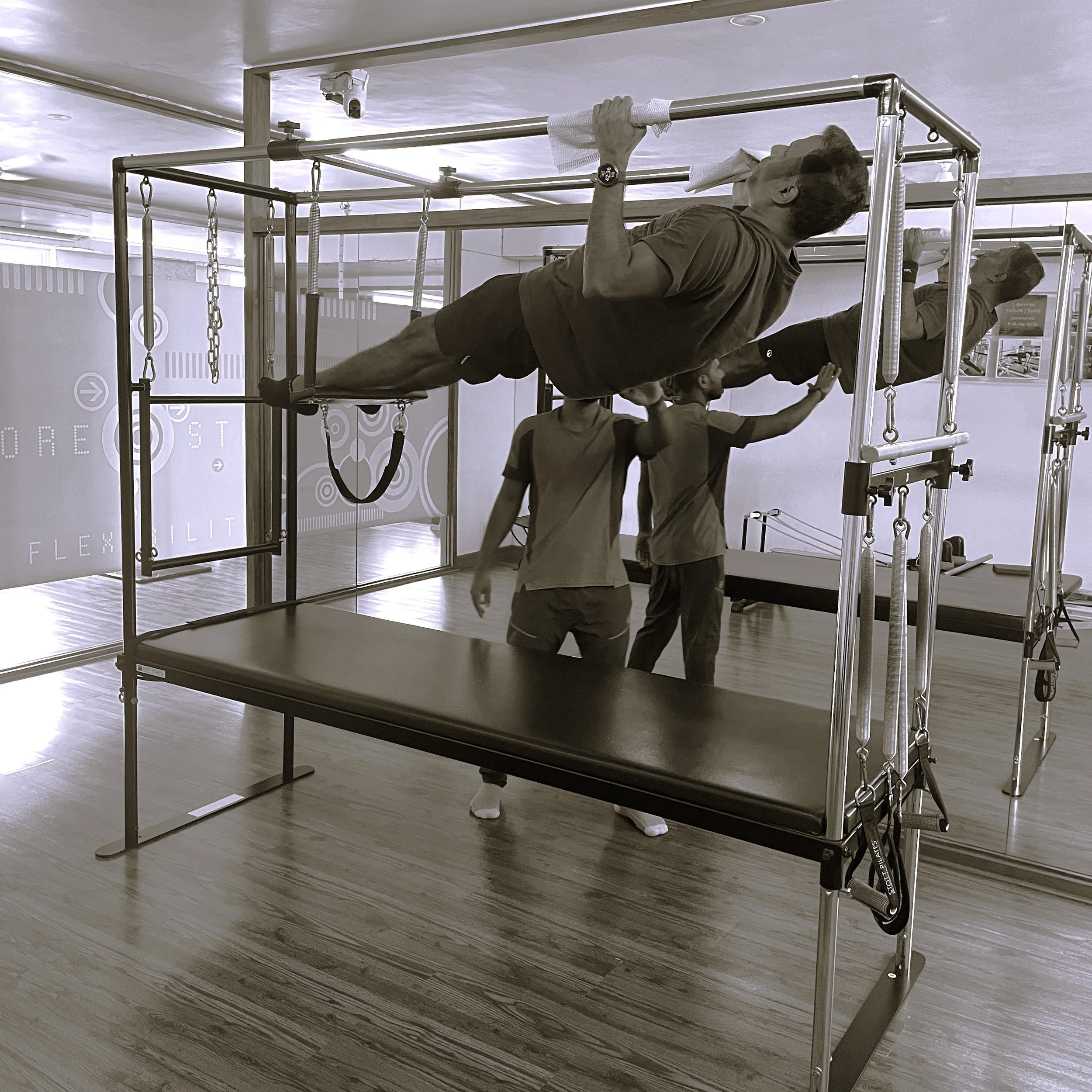
Fitness is what gets you to the last station. Control is what gets you through it well.
When you are exhausted, your brain takes shortcuts. Movement gets sloppy, breathing gets shallow, and you stop feeling where your body is. That is when injuries happen.
Pilates trains the opposite. Every movement is slow, precise, and deliberate. You learn to breathe with the effort, to feel which muscle is working, and to correct yourself before form breaks down. Over time, that awareness becomes automatic. It is still there at kilometre seven, when you need it most.
Control also depends on listening to your body and reading what it is telling you: the difference between hard effort and a warning sign, which side is working harder, and when a niggle needs attention before it becomes an injury. Pilates builds this session by session, and it serves you in every training week, not only on race day.
Control and focus are skills, and like any skill, they sharpen with practice. Race day is where you feel the difference.
What This Looks Like in Practice at The Zone
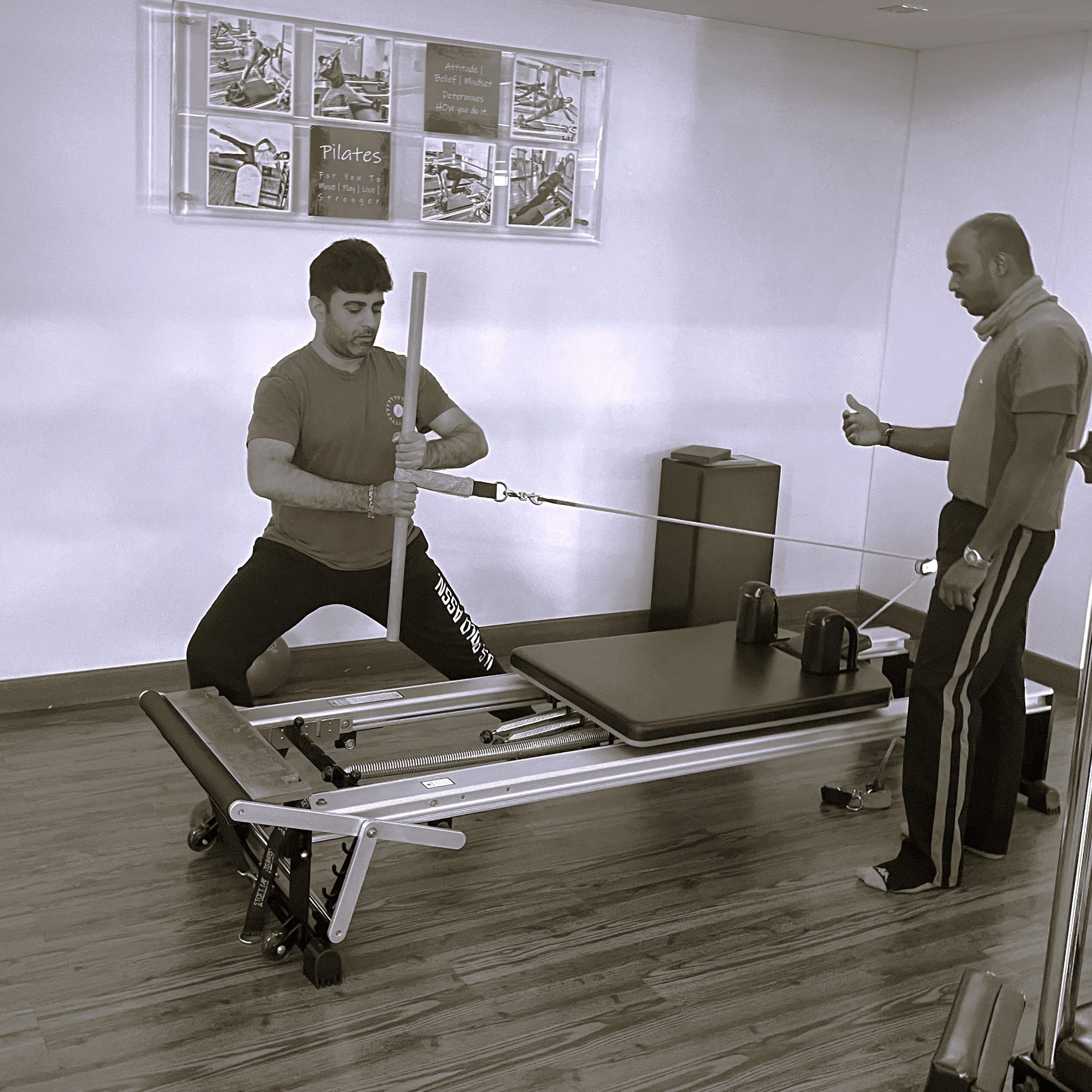
At The Zone, we do not train you just for a race. We train your body to do whatever you choose, and to keep doing it.
For someone getting into fitness racing, that might mean:
Building the base before you start race training, so you begin with joints and stabilisers that can take the work.
Strengthening alongside your race training, targeting the areas that repetition wears down: hips, knees, lower back, and shoulders.
Correcting compensations before they become injuries.
Recovering and returning well if something has already flared up.
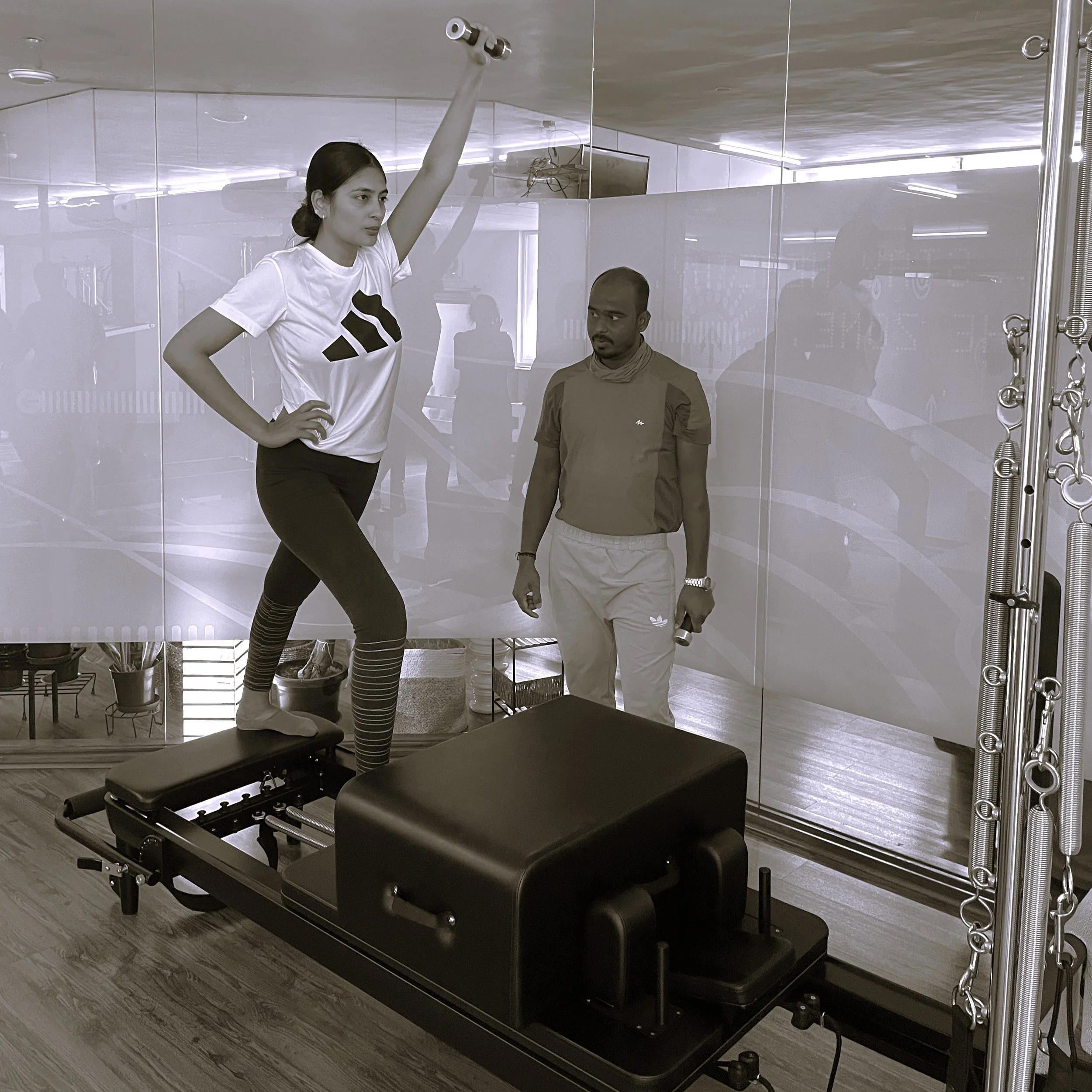
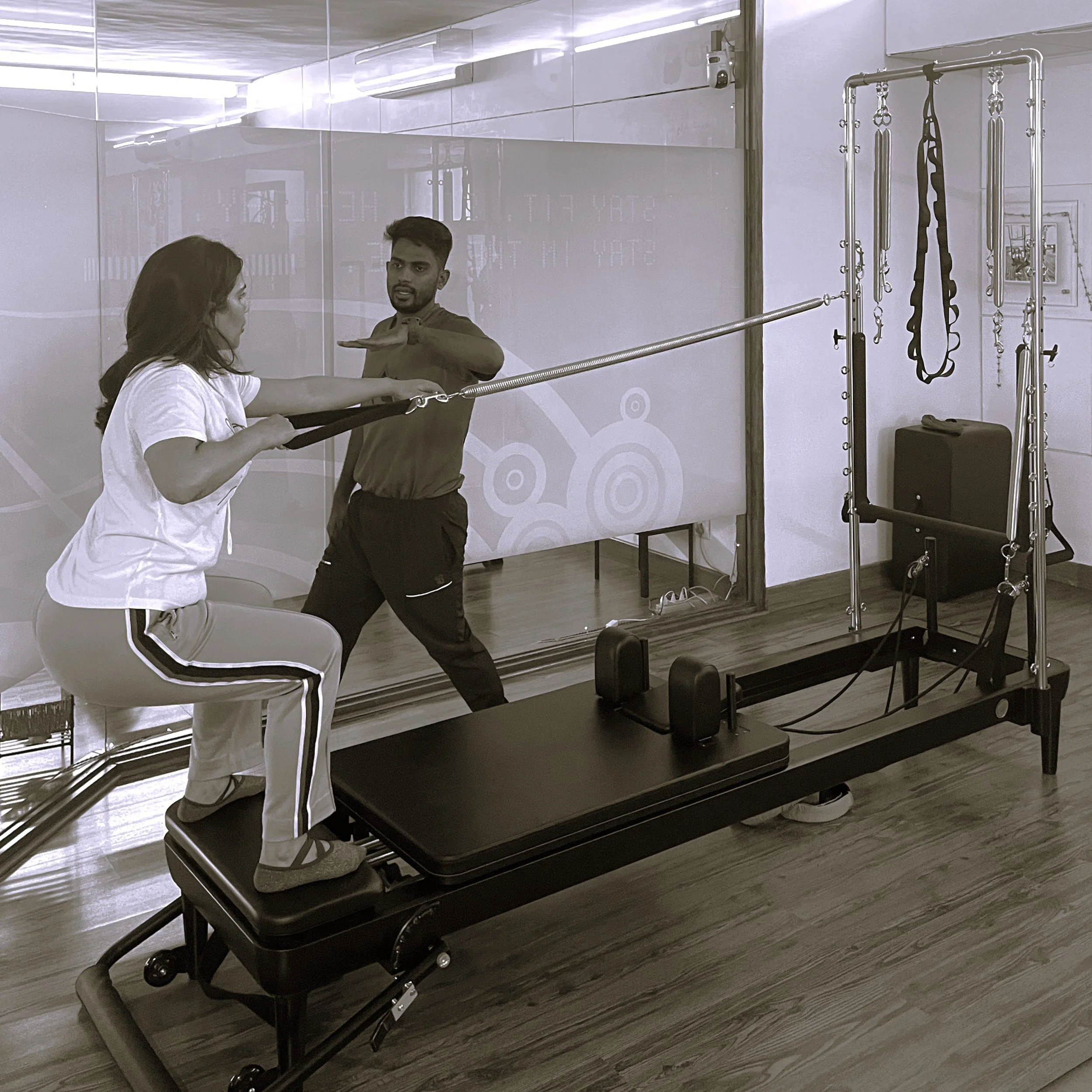
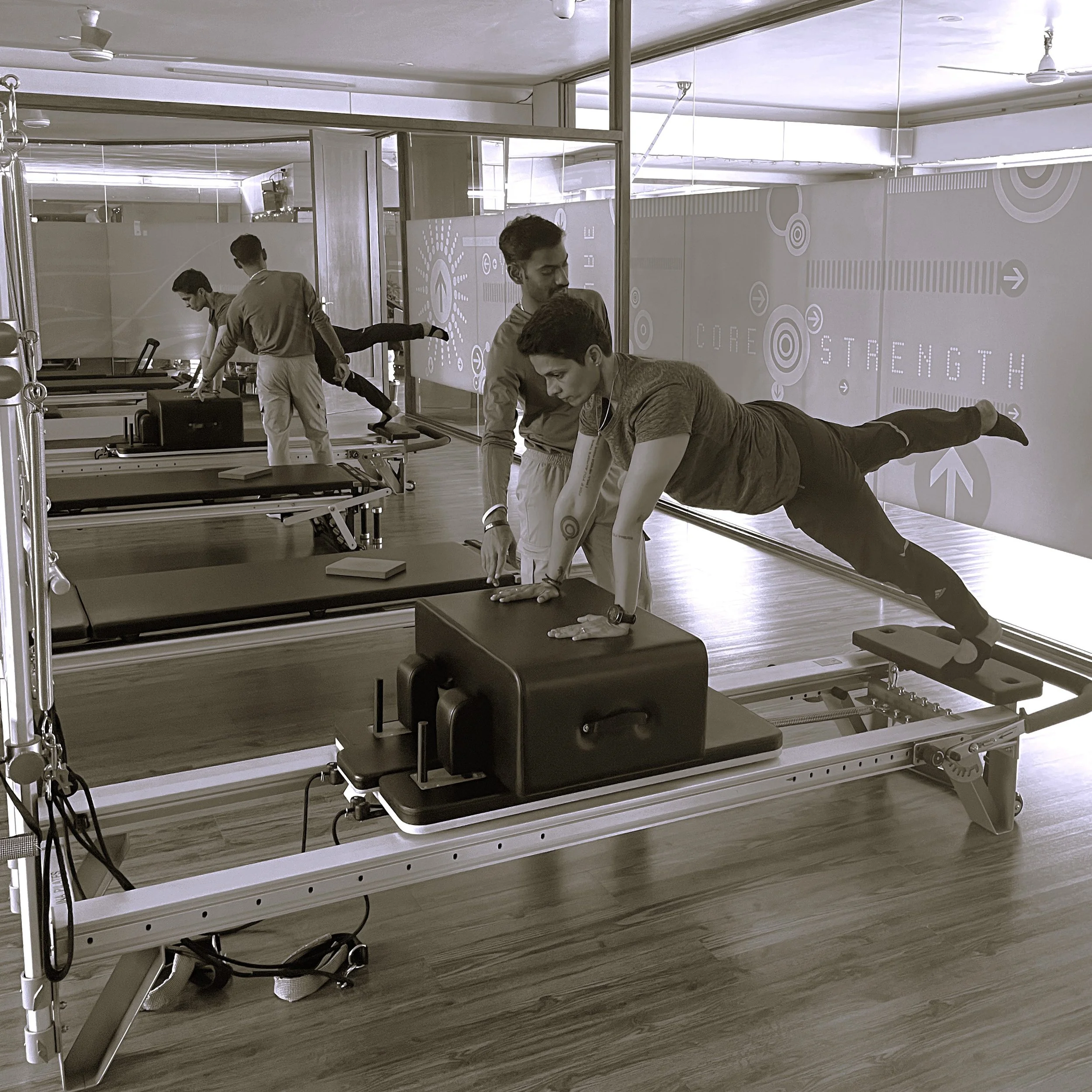
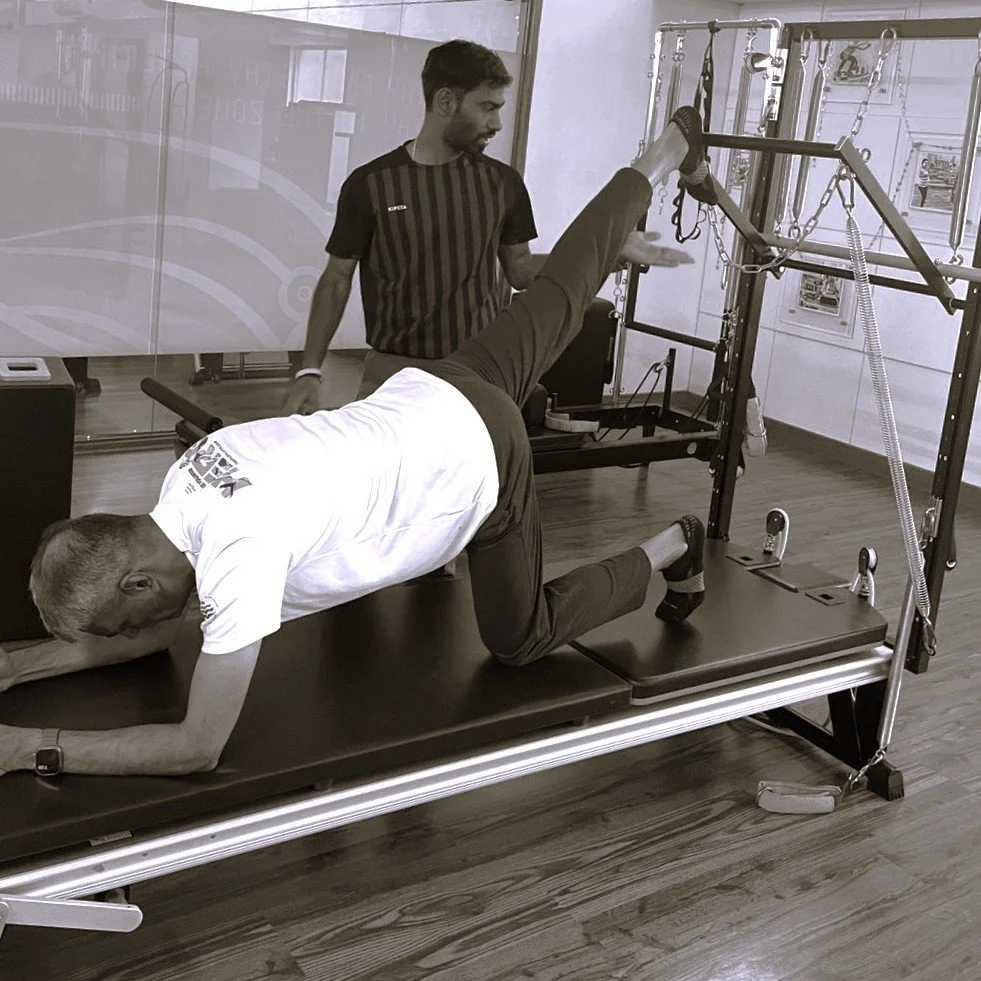
Every session is one-on-one with a Pilates instructor, on equipment that lets us load, support, and challenge each joint precisely.
As the pioneers of Pilates in India, we have refined this method at The Zone, over two decades of teaching. HYROX may be your goal now, and you may choose a different challenge later.
The body you build here goes with you.
Can Pilates help with HYROX training?
Yes. Pilates helps with HYROX training by building core strength, joint stability, and movement control, which are the qualities that protect your body from the repetitive load of fitness racing. It works best alongside race training, not in place of it.
Race as hard as you like. Build the body that lets you keep doing it.
If you are training for a fitness race, or thinking about your first one, a Pilates Personal Training session at The Zone is the place to start.