
The Way You Train Changes How Your Nervous System Responds
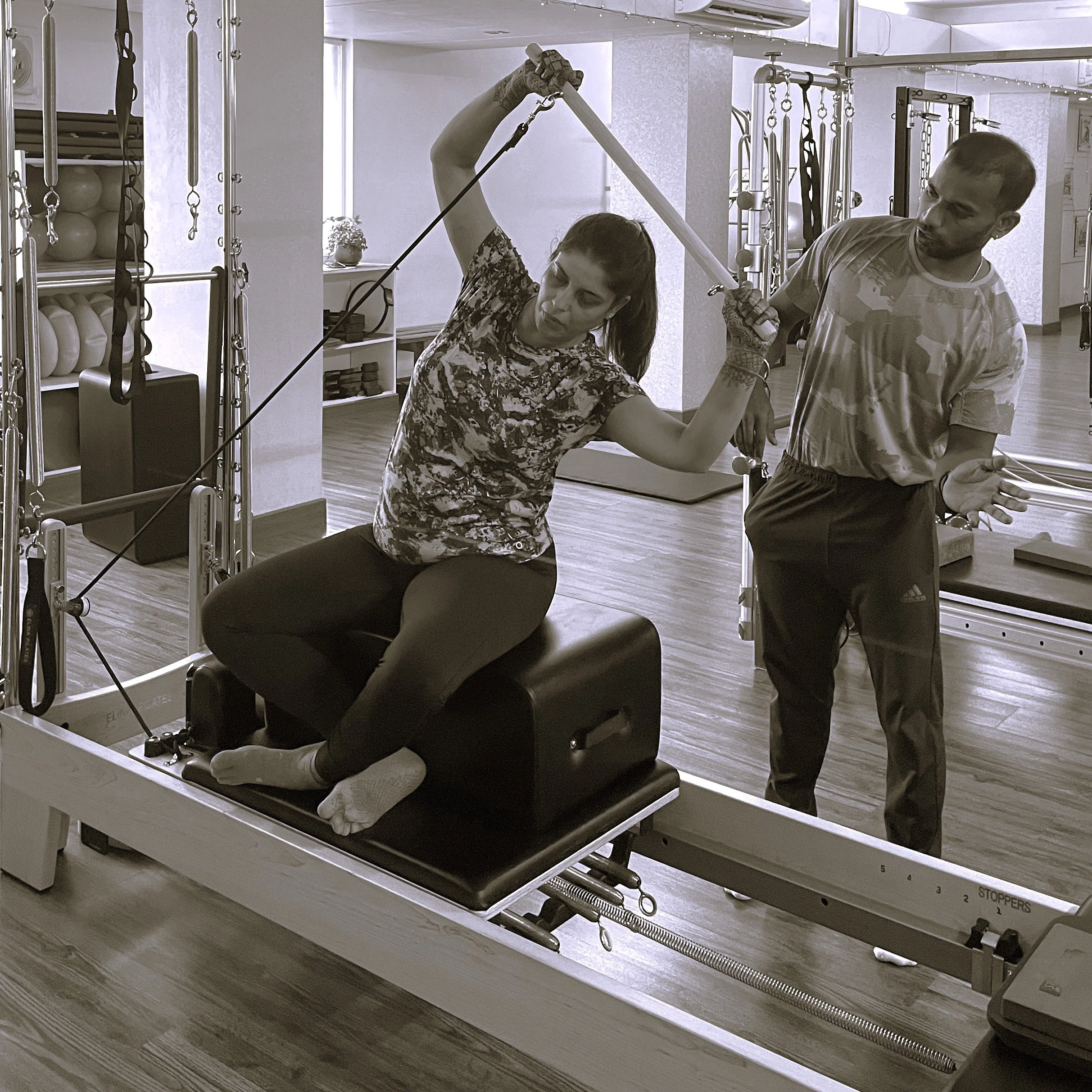
Nervous system regulation is everywhere right now — in wellness feeds, in podcasts, in conversations about stress, sleep, and recovery.
Terms like vagus nerve (which controls the rest-and-digest response), HRV (heart rate variability), and fight-or-flight used to belong to a sports physiologist or a trauma therapist. Now they're part of how people talk about their everyday stress — focusing mostly on breathwork, meditation, recovery therapies.
Less of it asks a more practical question: what does this mean for how you move your body?
How hard you train isn't what determines whether a workout leaves you calm and restored or wired and depleted — it's how that effort is delivered.
That's what I've seen in years of working with clients one-on-one, and it's what Pilates — slow, controlled, precision movement — has always understood.
What nervous system regulation actually means
Your nervous system utilizes two distinct pathways.
The sympathetic branch is your fight-or-flight response — it gears you up, tightens muscles, quickens breath, prepares you to react.
The parasympathetic branch is your rest-and-digest response, the state your body needs to recover, repair, and reset.
A well-regulated nervous system moves between these two states fluidly — activating when it needs to, and returning to calm afterward without getting stuck.
The vagus nerve plays a central role in that return to calm — it's the nerve most responsible for shifting the body back into rest-and-digest mode.
This is the part that matters for training: movement can either support that return to calm, or work against it.
Two separate things drive your stress response — not just one
When you work out, your nervous system does not respond in one way only. In practice, two different things are happening.
Physical effort refers to how hard your body is actually working — heart rate, muscular demand, cardiovascular load. This raises cortisol and adrenaline somewhat — as a normal, expected part of exercise physiology. That's not a bad thing. It's how the body adapts and gets stronger.
Perceived threat. During a workout, the nervous system reads certain conditions as a threat: high-impact movement, unpredictability, racing the clock, and workouts that don't allow proper recovery — either within a session or between sessions.
This perceived threat sits on top of physical effort, and it's what keeps the body elevated in a stress state or delays its return to calm afterward.
The mistake is treating these as one variable. They're not. A session can be physically demanding without being chaotic.
How this maps to your nervous system:
Perceived threat (impact, unpredictability, rushing) → keeps the sympathetic (fight-or-flight) response switched on
Physical effort alone (heart rate, muscular demand, cardiovascular load) → allows the parasympathetic (rest-and-digest) return to calm
Why controlled, precise movement works differently
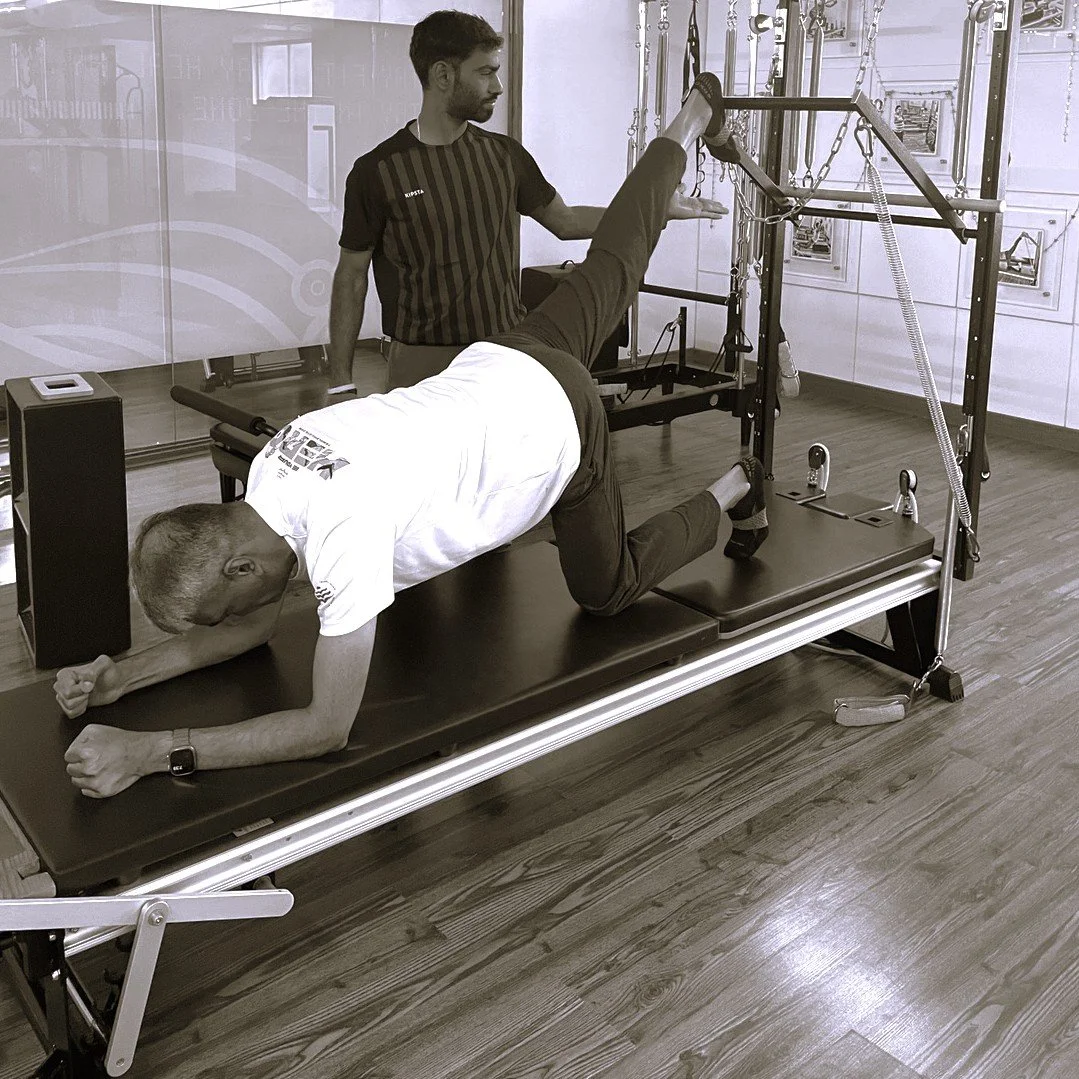
This is where breath-led, tempo-controlled movement earns its place. Coordinated exhalation, deliberate pacing, and controlled execution remove the chaos layer without removing the effort.
There's no high-impact jarring the joints. No unpredictability forcing a reactive response. No pressure to match someone else's pace, pushing you past what your body is prepared to do that day.
The nervous system isn't scanning for a threat — it's registering conditions it can work through calmly, even while the muscles are working hard.
This is also why breath is taught with the same precision as movement in Pilates, not left to happen on its own.
Coordinated breathing — inhaling to prepare, exhaling through effort — isn't just a rhythm to follow.
It's a direct lever on the parasympathetic system, and it's built into every exercise for that reason.
Controlled movement doesn't mean low effort or soft results
Being controlled doesn't mean being easy — this is where most people misread Pilates.
A controlled reformer or Cadillac sequence can be genuinely demanding — building real strength, real muscular endurance, real results — while still avoiding the chaos layer that makes hard training feel threatening to the nervous system. Control and challenge are not opposites. What's actually being removed from a session isn't effort. It's the impact, the uncontrolled movements, and the push to keep up with a clock or a class that intensity often comes bundled with — but doesn't have to.
This is the reframe worth considering: you're not choosing between a workout that challenges your body and one that calms your nervous system. Done with the right control and precision, it's the same workout that delivers both.
What this looks like in practice
This principle isn't new to us. It has been the foundation of our work since 2005, when The Zone introduced Pilates to India — a method of controlled, precision movement led by breath. What's now being called nervous system regulation, we've simply called good training.
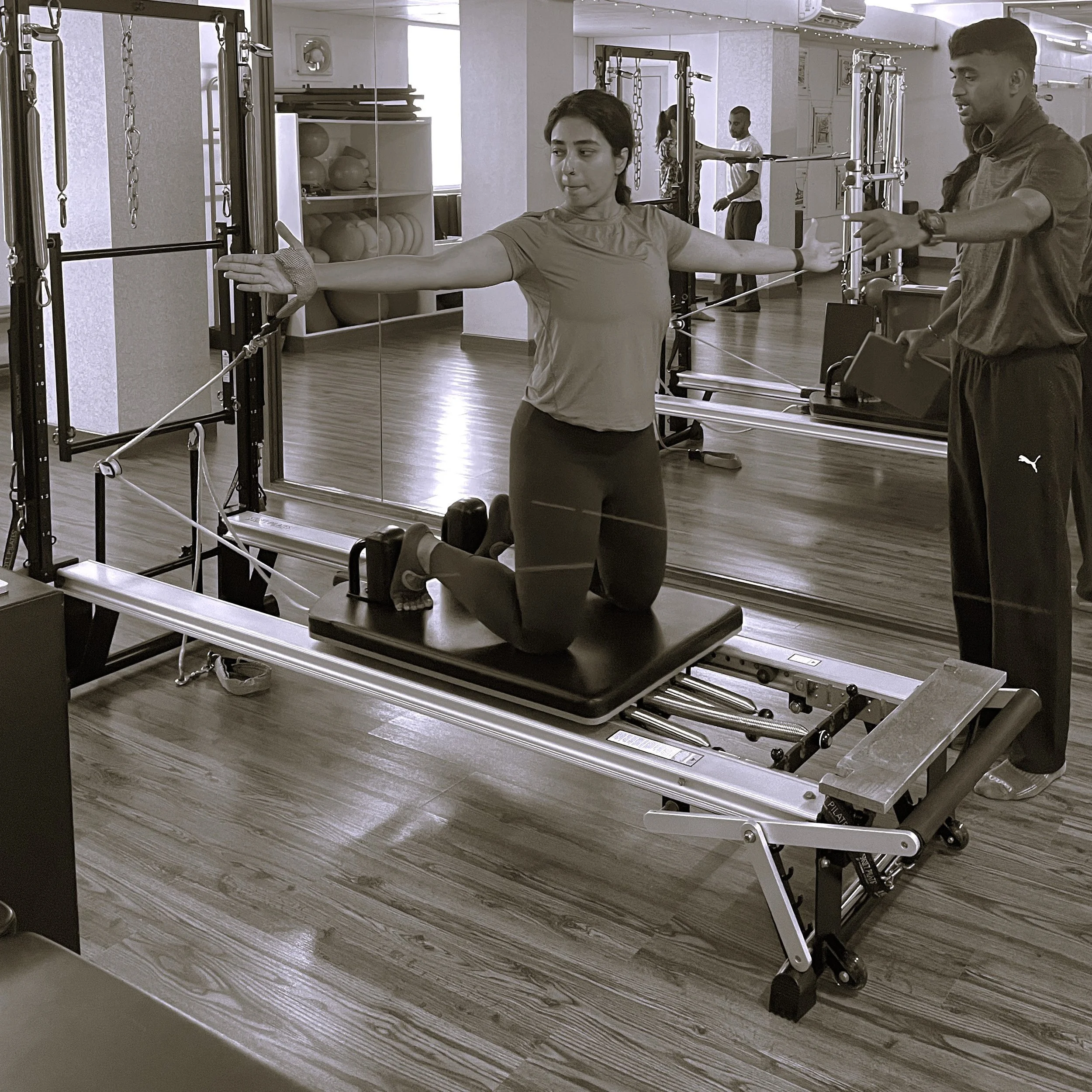
This is also why the format of a session matters as much as the exercises themselves. Instructor-led, one-on-one work is calibrated to what your body and nervous system can handle that day — not to a class pace, a group's energy, or a fixed program.
Pacing, load, and progression are adjusted in real time, which is exactly the kind of attentive, non-rushed execution this piece has been describing.
What to look for
Whatever you're training for, here's what determines whether a session works with your nervous system or against it:
Controlled pacing, not a rush from one exercise to the next
Breath cued and coordinated with effort, not incidental
No high-impact, and no group pace to keep up with
Instructor attention calibrated to you, not a fixed sequence applied to everyone
Effort and calm aren't in competition. The way you train determines whether you get both.
Precision isn't a compromise on effort — it's what lets your body train hard and recover well.
Pilates was built around exactly that balance. If you'd like to know more, get in touch.