Built to Move. Train to Last.
Why Runners, Cyclists, and Trekkers Need Equipment-Based Pilates
You train consistently. You put in the kilometres, the climbs, the hours. And yet, somewhere along the way, the knee flares up, the hip gets tight, the lower back complains after every long effort. You stretch more. You rest more. The problem doesn't go away.
This is not a fitness problem. It is a training gap - and it is one that Pilates closes with precision.
At The Zone, we work with runners, cyclists, and trekkers who are already serious about their sport. They come not because something isn’t working, but because they want to move better, last longer, and stop losing training days to pain that shouldn't be there. What they find is a method that works at a level of depth that no amount of extra gym work, yoga, or generalised core training will ever reach.
The Equipment: What It Is, and Why It Matters
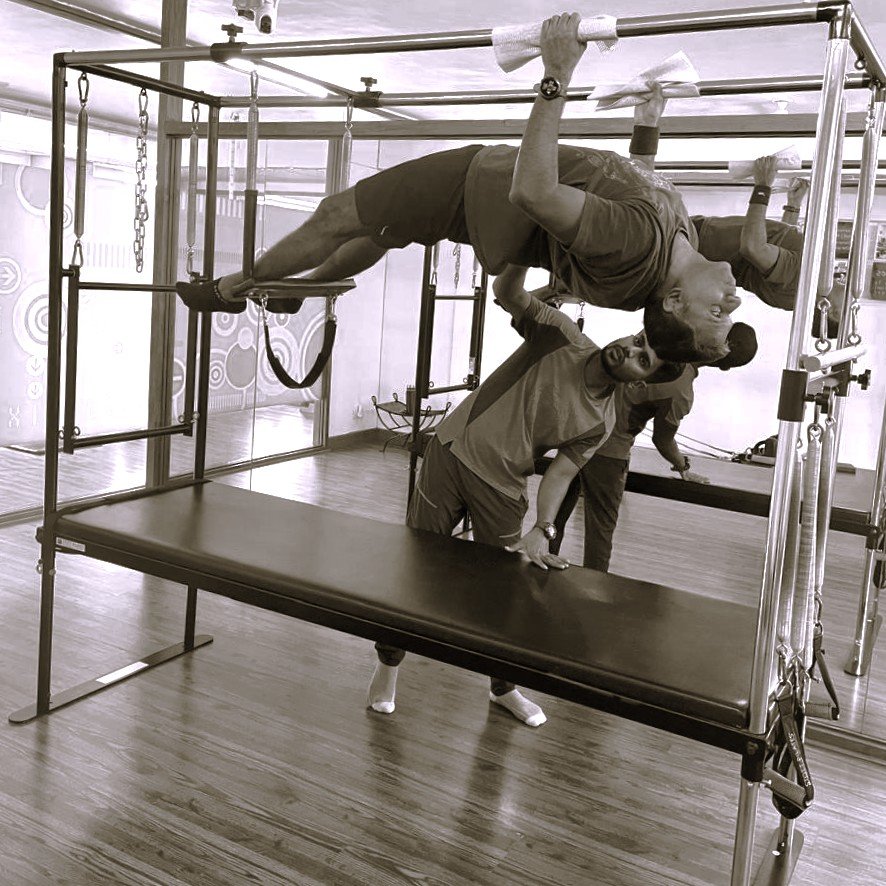
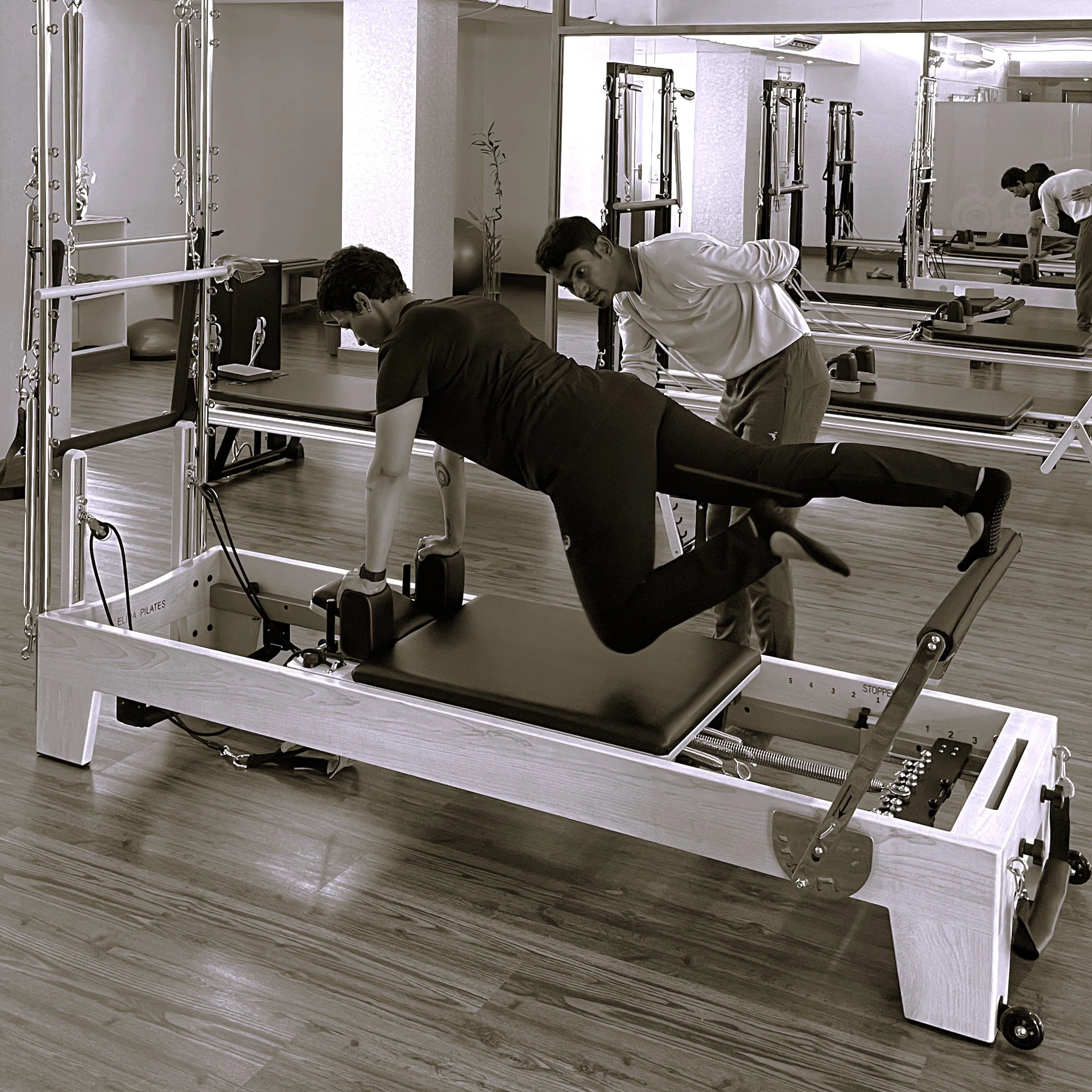
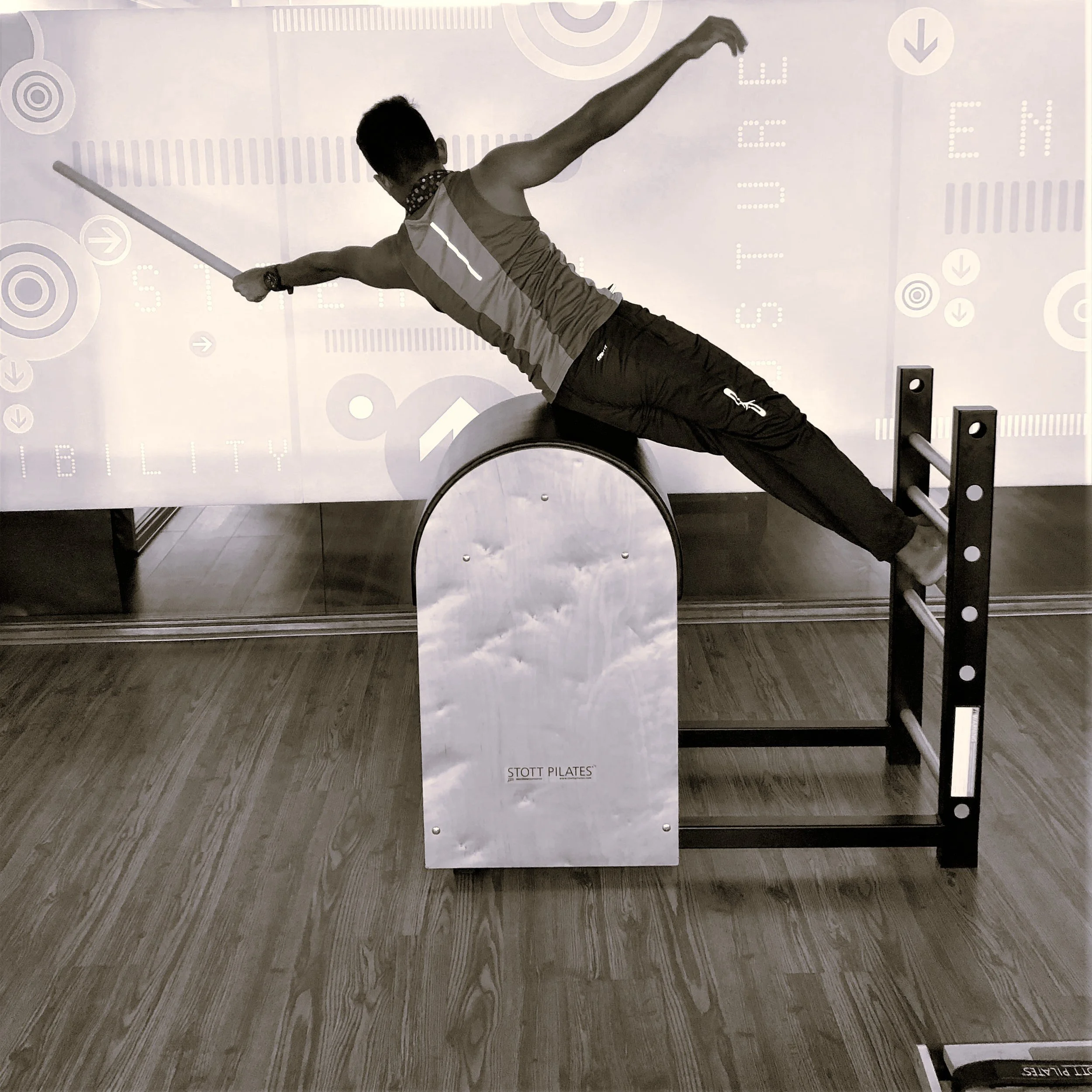
When most people hear “Pilates,” they think of a mat on the floor. Mat Pilates represents only one dimension of the method. At The Zone, all sessions are practised primarily on equipment: the Reformer, the Cadillac, the Tower, the Chair, the Ladder Barrel, and the Jump Board. Each piece uses a system of springs, pulleys, straps, and calibrated resistance to create conditions that no conventional gym machine replicates.
The Reformer is the most versatile of all. It loads the body through full ranges of motion while the moving carriage simultaneously challenges and trains spinal and pelvic stability. For an athlete, this is the difference between a hip that holds alignment under load and one that collapses into compensation.
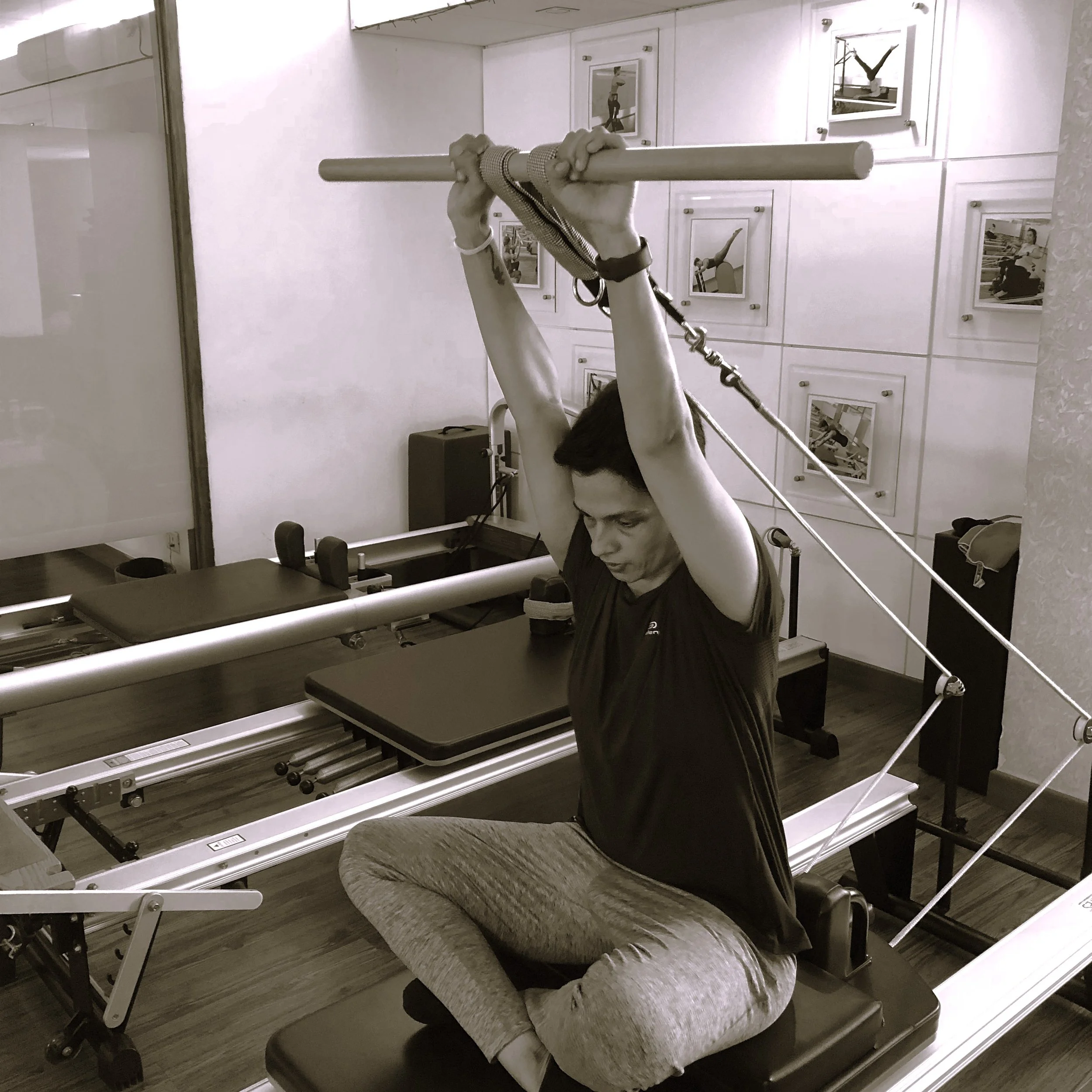
The Cadillac and Tower introduce deeper elements to spinal articulation, mobility, and functional balance. Spring-loaded bars and hanging straps allow for decompression and resistance across multiple planes - directly targeting the thoracic and lumbar restrictions that sport-specific posture builds over time.
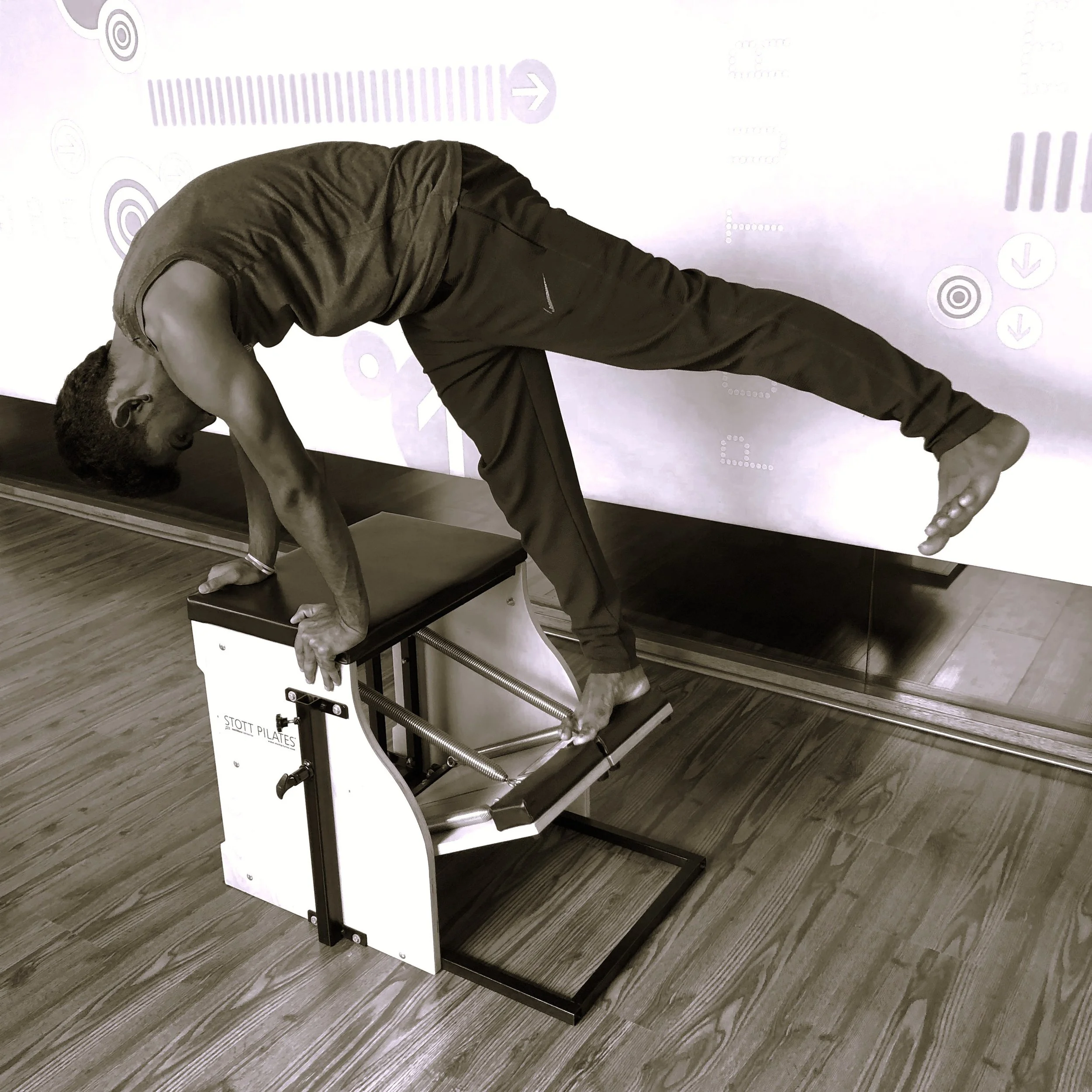
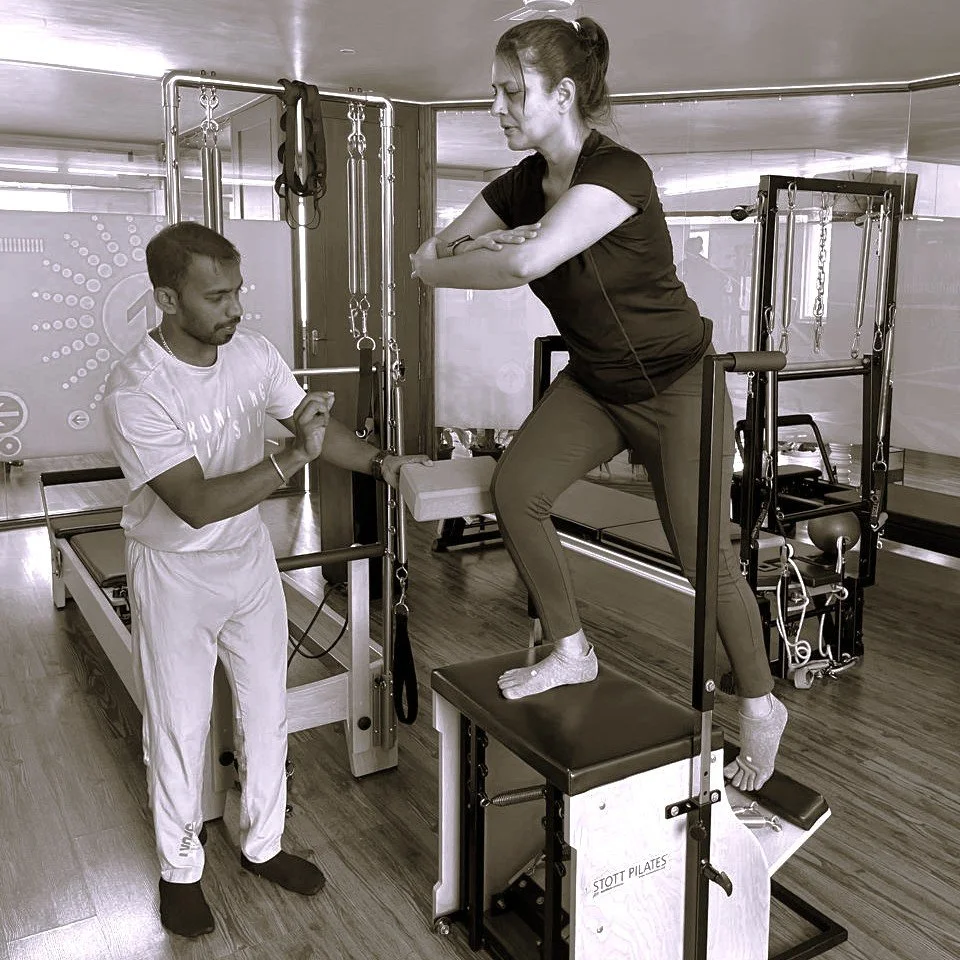
The Chair is the most demanding. With a small surface area and spring resistance - it requires the body to stabilise and move simultaneously in a way that directly mirrors what sport demands: balance, coordination, asymmetrical load, all at once.
The Principles That Make the Difference
Most serious athletes follow a training mantra they trust: hard gym sessions, yoga for flexibility, core work for stability. It is a reasonable framework. It is also an incomplete one.
Gym-based strength training builds capacity - but in isolation. It does not train the body to stabilise itself while moving through space, which is precisely what running, cycling, and trekking demand. Yoga develops range but does not load it. Generalised core work strengthens, but rarely in the movement chains that sport actually uses.
Pilates works differently. Two principles govern every session: stabilisation and mobilisation - not as separate goals, but as partners trained together, under load, in motion.
Stabilisation is the capacity of the deep muscular system - the intrinsic core, the hip stabilisers, the shoulder girdle, the foot - to hold the body in alignment while it is moving and under load. A person can be strong by every gym metric and have almost no functional stabilisation. In sport, this shows up as repeated injury at the same joint, or as a performance plateau that more training cannot shift.
Mobilisation is the capacity for free, controlled movement through a joint's full range - not flexibility as an end in itself, but mobility that the body will actually use while it is working. Restrictions in the thoracic spine, hip, or ankle force compensations that accumulate, over time, into injury.
What makes Pilates training effective is not just these principles - it is the precision of instruction incorporating these principles. Effective cueing and hands-on correction are what separate a body that is genuinely learning to move well from one that is working hard but reinforcing the same patterns. This is also where experience, with a deep understanding of the body’s ability to move, becomes a critical factor.
For the Runner
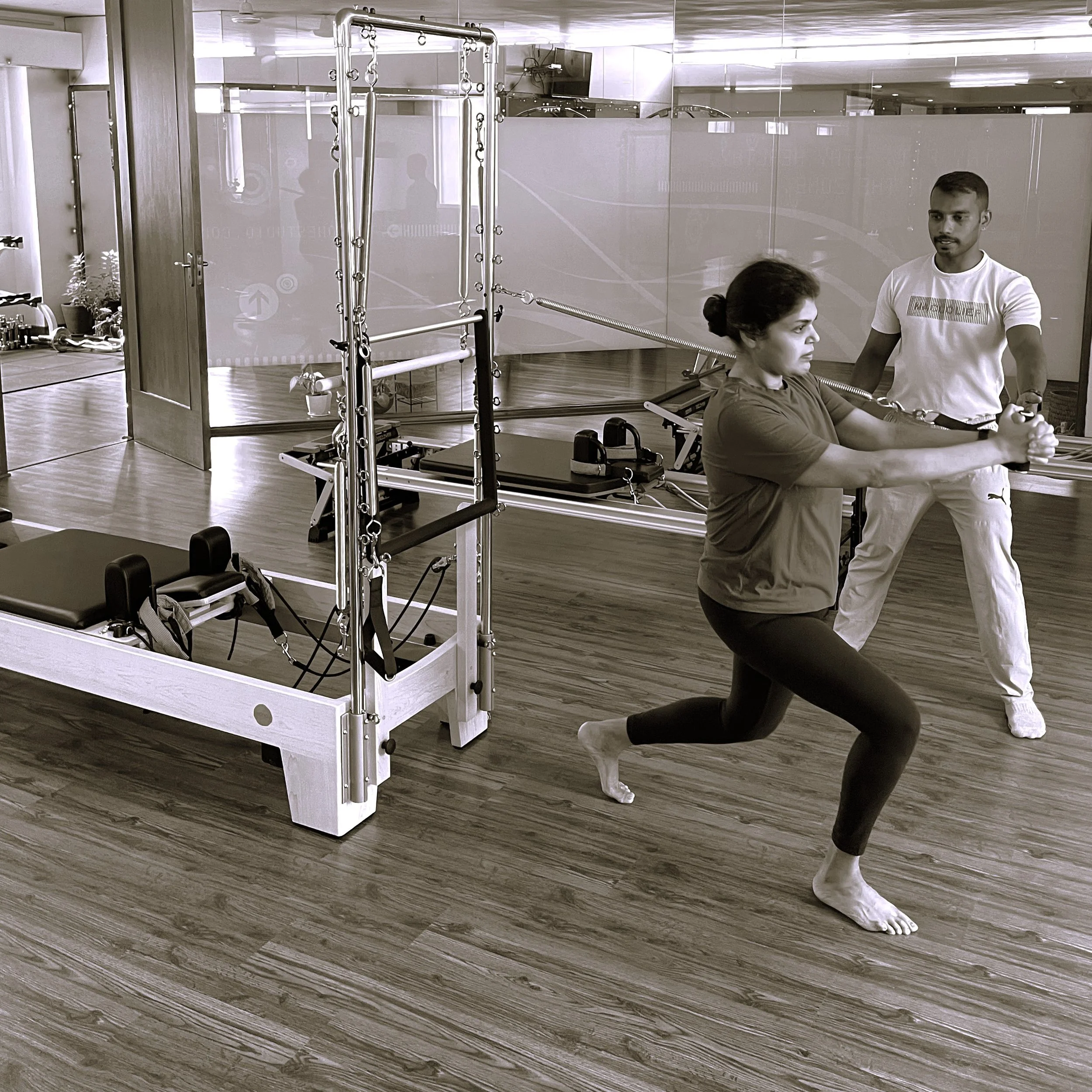
Running is a single-leg sport. Every stride requires the standing leg to absorb and redirect force while the pelvis and spine stay controlled above it. IT band syndrome, patellofemoral pain, recurring hamstring strain - these are predictable consequences of the same underlying pattern: the hip not loading efficiently, the pelvis dropping, the foot landing without support from above.
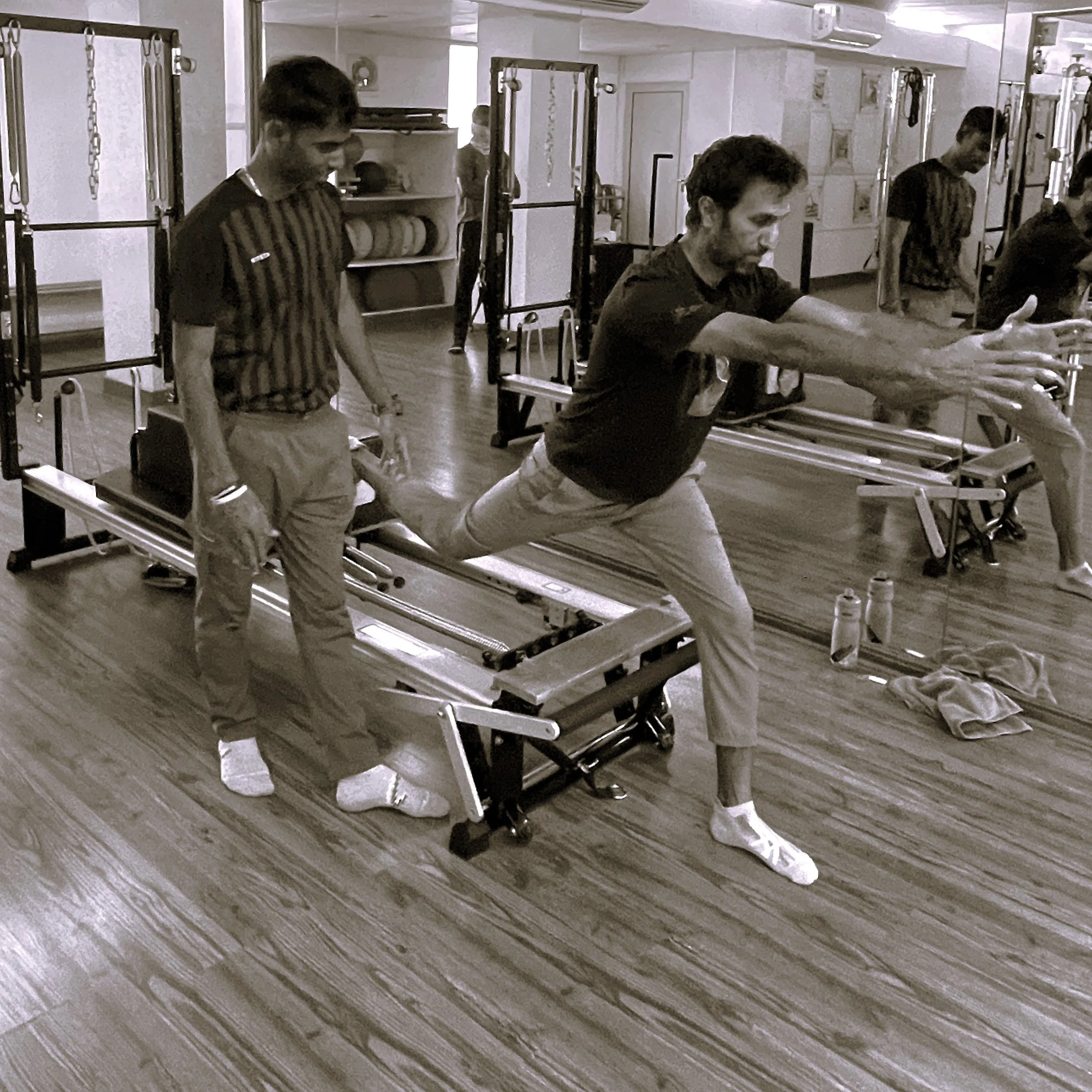
The Pilates machines focus on single-leg loading in a controlled, correctable environment - where the pelvis and hip can be addressed in real time. Other crucial areas addressed are thoracic rotation - the upper body counterrotation that drives efficiency and reduces load on lumbar spine. Foot and ankle stability is equally addressed - for shock absorption and efficient energy transfer.
Runners who do this work run with better economy, better posture under fatigue, and fewer training days lost to injury.
For the Cyclist
Cycling builds tremendous strength and cardiovascular capacity. It also builds a body that has gone through innumerable rides holding one position - flexed at the hip, rounded through the upper back, compressed at the lumbar spine. A position that inevitably leads to problems.
Working with a wide repertoire, on the machines, Pilates addresses thoracic extension and rotation - movements that become restricted with prolonged cycling. The work is focused on creating length and mobility through the spine in ways that stretching alone cannot achieve. Over time, a cyclist often loses access to gluteal and posterior chain activation. Specific programming effectively retrains these mechanics addressing hip mobility and strengthening. Another area focused on is building lateral stability and knee tracking to maintain structural integrity around the knees and ankles.
For the Trekker
Trekking is a sustained, multi-hour demand on every joint and stabilising muscle in the body - on uneven terrain, under load, in conditions of cumulative fatigue. The ascent is taxing. The descent is where the body pays.
Movements on Pilates machines teach eccentric strength and control – critical for a trekker to be able to decelerate with control on descents. This training aspect is largely absent from conventional training programmes. The different machines help build foot and ankle proprioception: the ability to sense and self-correct on unstable ground.
Trekkers who train with us go into the mountains with bodies that are mechanically prepared for what the terrain demands - and come back from them in better condition than those who didn't.
A Method That Has Earned Its Place
Pilates is a precise system of movement training that addresses the body's function at its foundation. It is part of the conditioning regimes of Olympic athletes across endurance, precision, and multi-sport disciplines worldwide - not as a recovery tool or a supplementary add-on, but as a fundamental part of how serious athletes prepare and sustain performance.
For the runner, cyclist, or trekker who already trains hard, it is the layer that makes every other training more effective - and sustainable over the long term. The equipment does not make the work easier. It makes it more specific. The springs, the resistance, the precision of instruction - they reveal what the body is doing and what it is avoiding. That clarity is what creates lasting change.
At The Zone, all sessions are private, 45 minutes, and scheduled in advance. The work is specific because the body demands specificity.
TRAIN AT THE ZONE
If you are a runner, cyclist, or trekker in Bangalore who is ready to train with more intention - and more results - The Zone is where that work happens. To book a session or enquire about availability, contact us.
That's The Zone, Bangalore.