From Desk Slouch to Pilates Strength
How Pilates Corrects Desk Posture
You spend 8-10 hours a day at a desk. Your body knows it. Your neck knows it. Your lower back definitely knows it.
This isn't about bad posture being a personal failure. It's about what happens when the human body - designed to move - spends most of its day locked in one position. And it's about what actually works to undo that damage. 'Just sit up straight' doesn't work. Here's why, and what does.
What Desk Work Actually Does
This isn't an anatomy lecture. It's a recognition of what you're already feeling.
Your head migrates forward.
Your head weighs 10-12 pounds in neutral position. For every inch it moves forward from its ideal alignment, you add approximately 10 pounds of strain on your neck and upper back. Most desk workers' heads sit 2-3 inches forward - that's a minimum of 20–30 pounds of extra load you're carrying without realizing it. The result: chronic neck tension, restricted movement, and persistent tightness through the upper back.
Your shoulders round forward, your chest collapses.
Hours of reaching toward a keyboard and mouse pull your shoulders into a rolled, inward position. Your chest tightens and your upper back weakens, leaving your shoulder blades unable to sit where they belong. This affects shoulder mobility - reaching overhead becomes uncomfortable or impossible. It affects breathing - your rib cage can't expand fully when your shoulders are collapsed forward.
Your hips lock up, your glutes forget how to fire.
Prolonged sitting shortens the muscles at the front of your hips and weakens the muscles at the back - your glutes. When you finally do stand up or try to move, your body compensates. Your lower back takes over work that your hips should be doing. The result: lower back pain that won't quit, no matter how many times you adjust your chair.
Your thoracic spine goes rigid.
Your mid-back is designed for rotation and extension - turning, reaching, bending backwards. Desk work locks it into the opposite: constant forward flexion. Over time, your thoracic vertebrae lose their ability to move independently. You lose the ability to rotate, your rib cage stiffens and restricts your breathing, and tension builds throughout your neck and lower back.
Why 'Just Stretch' Doesn't Fix It
Stretching tight muscles feels good temporarily. But it doesn't address the core problem: imbalanced strength and faulty movement patterns.
Your tight chest is tight because your upper back is weak and can't pull your shoulders back where they belong. Your tight hip flexors are tight because your glutes aren't activating to balance them out. You can't stretch your way out of a strength problem.
Pilates works because it addresses both sides of the equation - lengthening what's tight and strengthening what's weak, all the while retraining the movement patterns that created the problem in the first place.
How Pilates Corrects These Patterns
For forward head posture:
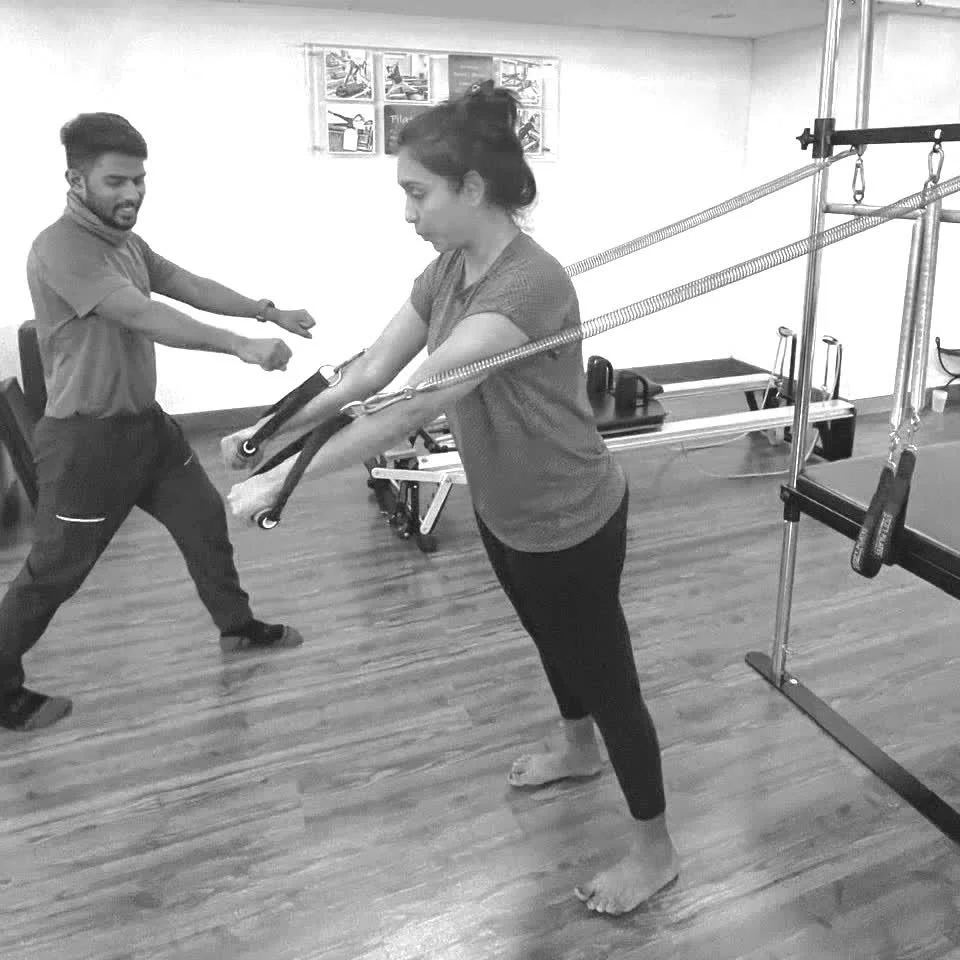
Pilates strengthens the deep stabilizing muscles at the front of your neck while releasing tightness at the base of your skull. It retrains proper head-neck alignment through movement patterns that become automatic. Simply telling someone to 'pull their head back' requires constant conscious effort - the moment attention shifts, the head drifts forward again. Pilates makes proper alignment the natural default position, not something you have to think about maintaining.
For rounded shoulders:
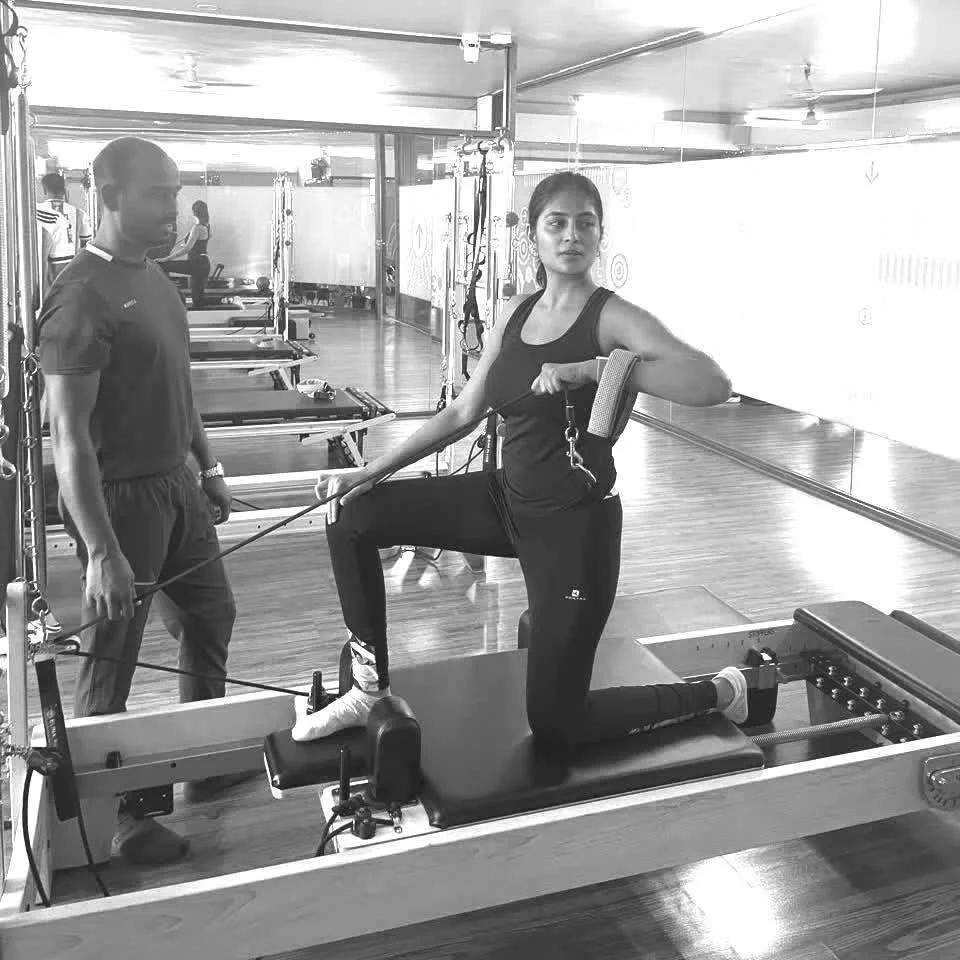
Along with opening the chest, you need to stabilize the shoulder blades and strengthen the upper back muscles that pull your shoulders into proper position and hold them there. Pilates addresses both simultaneously - chest opening movements paired with upper back strengthening work. Equipment like the Reformer provides controlled resistance that makes the strengthening precise and targeted.
For locked hips and weak glutes:
This is where the difference between passive stretching and active lengthening matters. Passive stretching is holding a position and waiting for muscles to release. Active lengthening is engaging opposing muscles to create length - your glutes and deep core activate to lengthen tight hip flexors, and in the process of creating that length, those working muscles (your glutes) build strength. This dual action creates lasting change. Pilates retrains your pelvis to find and maintain neutral position - not tipped forward, not tucked under, but balanced. From that foundation, your hips can move properly and your glutes can fire the way they're meant to.
For thoracic rigidity:
Pilates systematically restores movement to your mid-back through controlled spinal articulation - moving one vertebra at a time rather than in a block. It incorporates rotation, extension, and lateral bending - all the movements desk work eliminates. And it pairs movement with breath work that expands your rib cage in all directions, restoring the three-dimensional breathing pattern that shallow desk breathing destroys.
Why the Pilates Approach Works
Not because it's trendy. Because it's systematic.
It's precise.
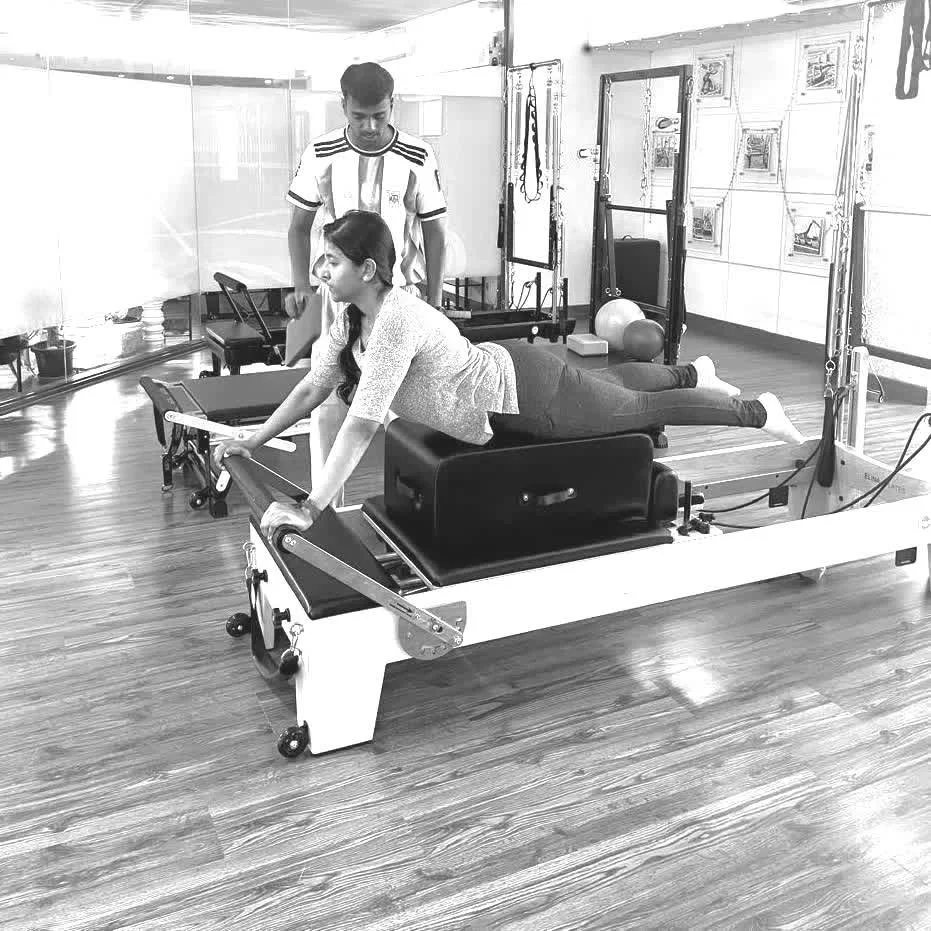
Every movement is controlled, every muscle engaged intentionally. It’s not about how many repetitions you do - you're retraining how your body approaches movement. This precision carries over into daily life. The shoulder stability you learn during a Pilates session becomes the stability that keeps your shoulders from rounding when you reach for your keyboard. The core activation you practice becomes the support that maintains your posture when you're sitting in meetings. Your body learns efficient patterns that replace the faulty ones - this is what functional fitness actually means: movement that serves your daily life.
It integrates breath.
Breathing isn't an afterthought in Pilates. It's the foundation. Proper breathing releases muscular tension, activates deep core stabilizers, and restores rib cage mobility. The breath pattern you learn in Pilates - full, three-dimensional breathing - directly counters the shallow, chest-only breathing that desk work creates.
It builds stability before mobility.
Mobility without strength is instability. Pilates doesn't push you into ranges of motion your body can't control. Instead, you build mobility by first stabilizing the joints and strengthening the muscles that support them. This prevents injury and creates movement capacity that's functional and sustainable.
It's progressive.
Pilates meets you where you are and progresses you systematically. Every movement can be modified to match your current capacity or progressed as you build strength and control. You're not trying to force yourself into someone else's workout - you're building your own capacity from your own starting point.
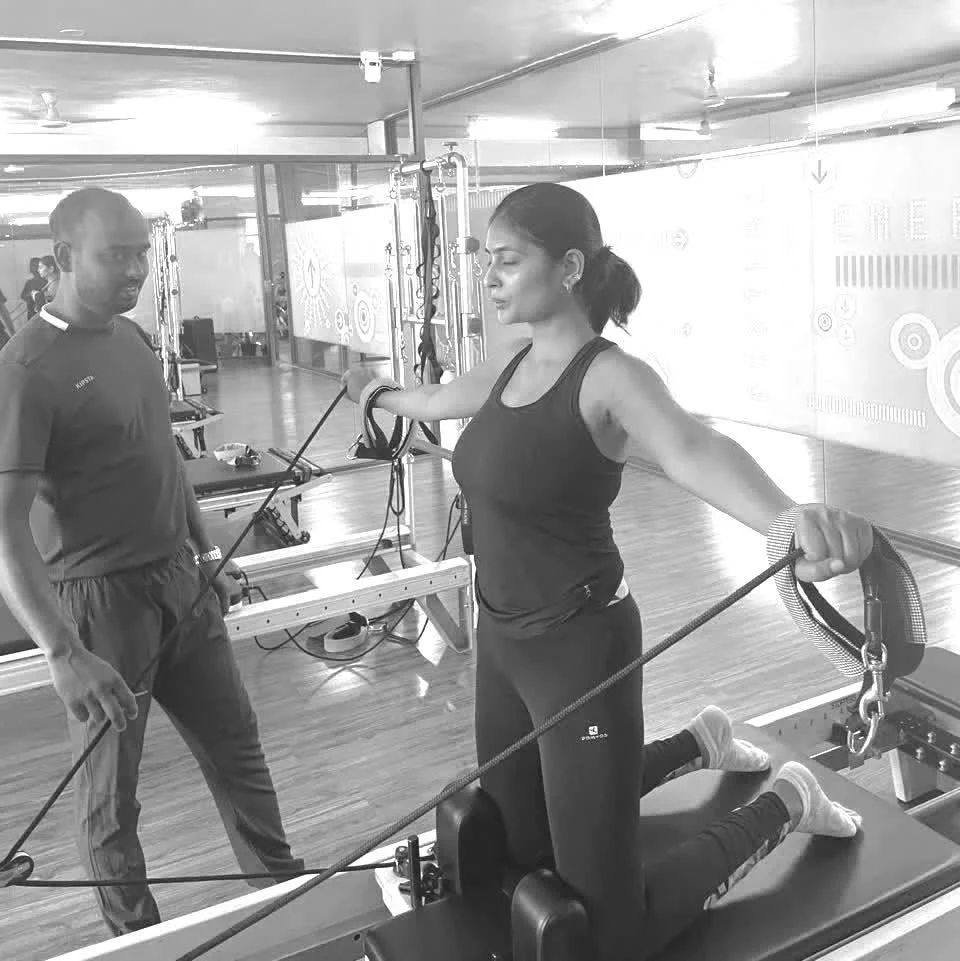
What This Looks Like in Practice
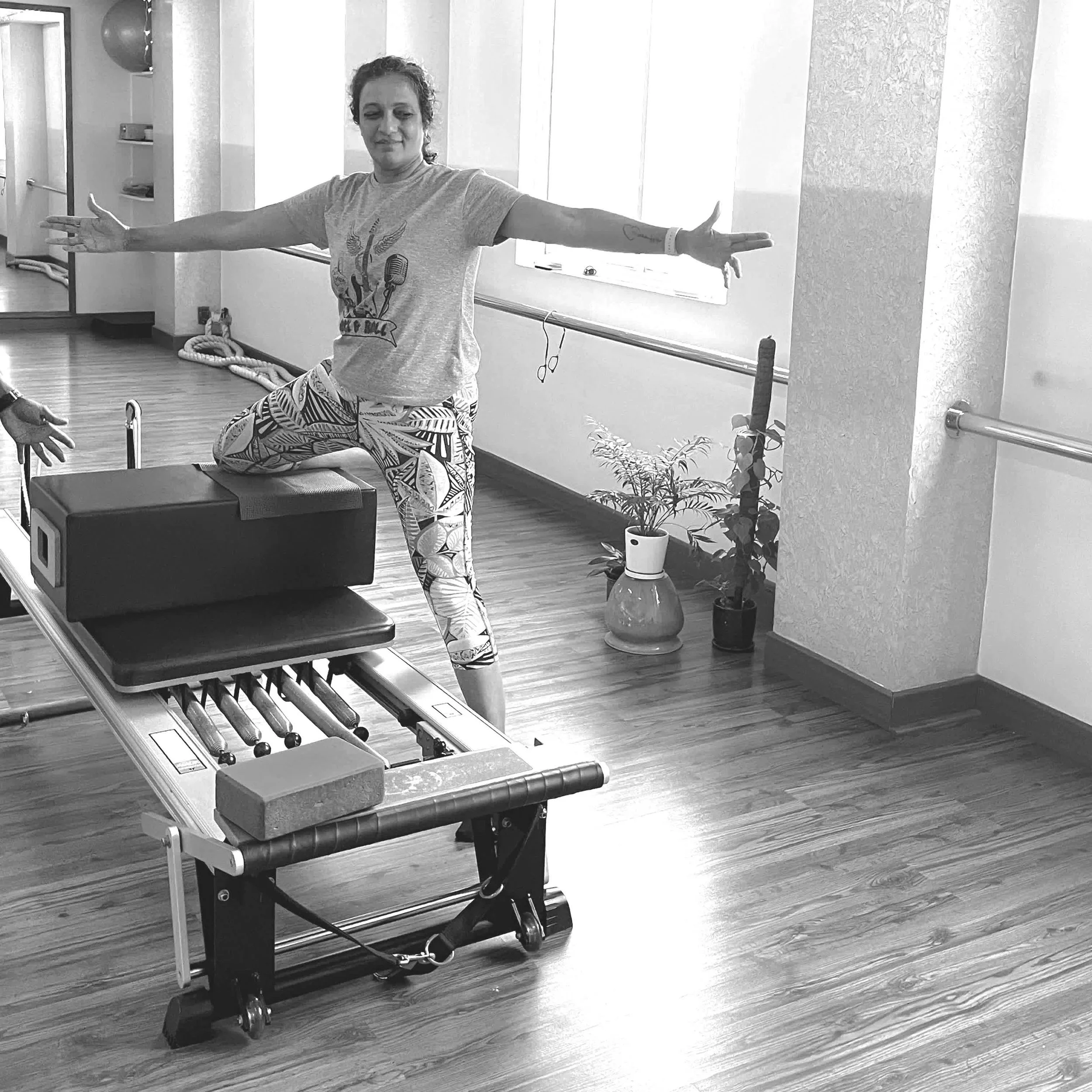
Not dramatic before-and-afters. Just people who can move through their day - strong and stress-free - without constantly thinking about their body. Which is the point.
The consultant who couldn't turn their head without experiencing pain - now drives through their commute without constant discomfort. The founder who couldn't sit through a board meeting without lower back discomfort - now gets through long days without reaching for the heating pad. The software engineer whose shoulders were so rounded they couldn't lift their arms overhead comfortably - now reaches for things on high shelves without thinking twice.
These aren't miraculous transformations. They're the result of consistent, intelligent movement that addresses root causes instead of chasing symptoms.
The Realistic Path Forward
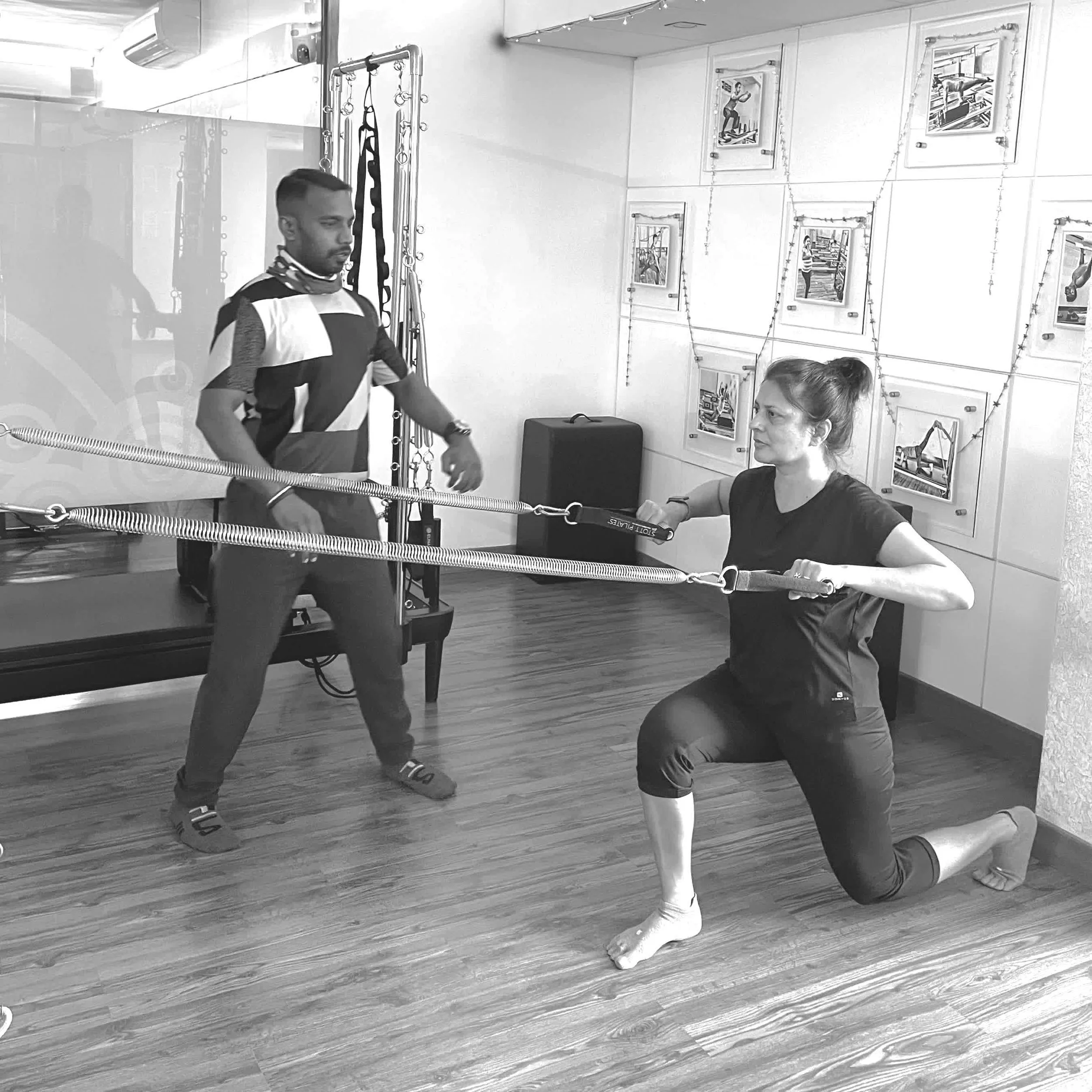
This isn't about perfection. Your job isn't going anywhere. The desk isn't going anywhere. But the way your body responds to it can change.
Pilates gives you the strength to maintain good alignment, the mobility to move freely, and the body awareness to catch faulty patterns before they take hold. It's not a quick fix. It's a sustainable one.
If you've been ignoring what your body's been telling you, now's the time to listen.