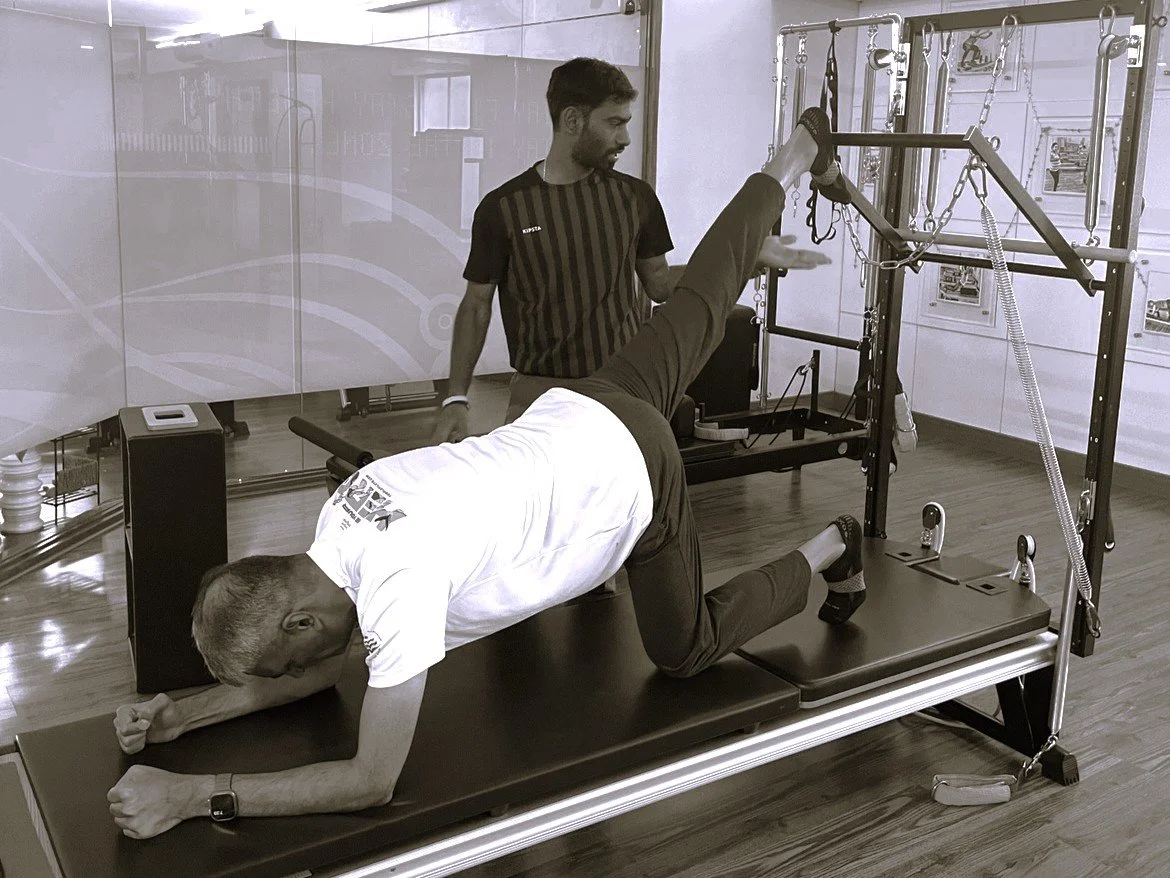
Pilates for Men: Strength, Mobility, Longevity
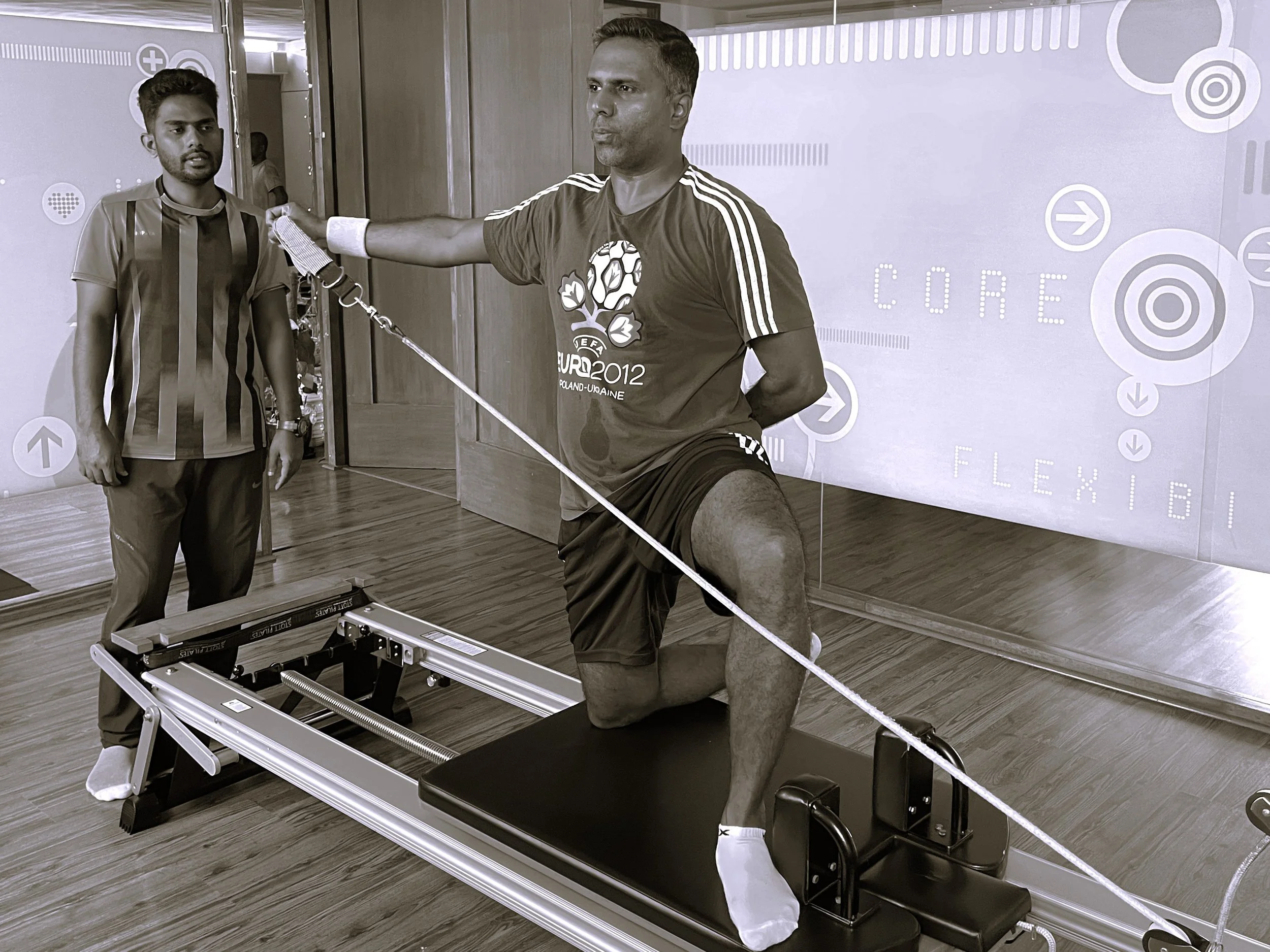
Should men do Pilates?
Yes. Pilates was designed for strength, control and injury resilience by a boxer and gymnast, and it delivers exactly that for a man's body.
Pilates is for anyone who wants to move and perform at their best, injury-free.
Where does Pilates come from?
Joseph Pilates was a lifelong student of movement. He developed his method, which he called Contrology, in the early twentieth century, drawing on boxing, gymnastics and anatomy to build strength through full, controlled range of motion.
He designed and built a range of equipment for his method: the Reformer, the Chair, the Barrel, and more. None of it is a modern addition. It is the original method, built by its founder, for exactly the kind of training men are looking for today.
Its purpose was practical from the start. During the First World War, Pilates worked with soldiers recovering from injury, adapting bed springs into resistance systems, an early version of what became the Reformer. Strength, rehabilitation and control were built into the method from day one.
What does Pilates do for men?
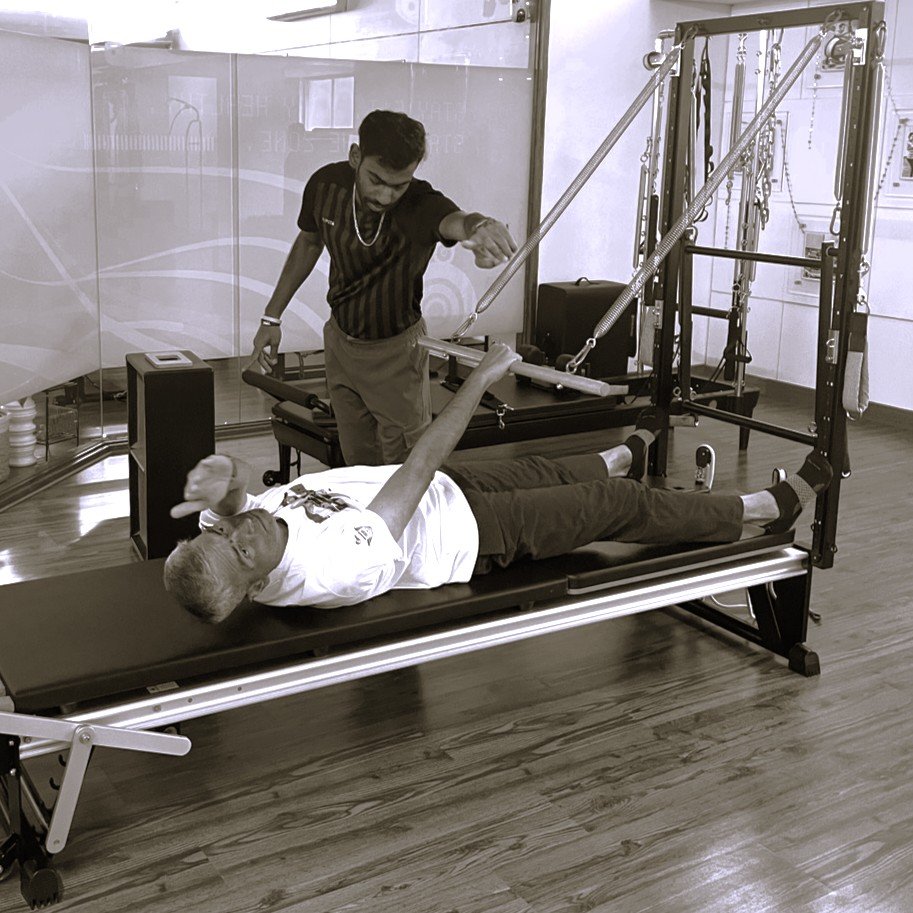
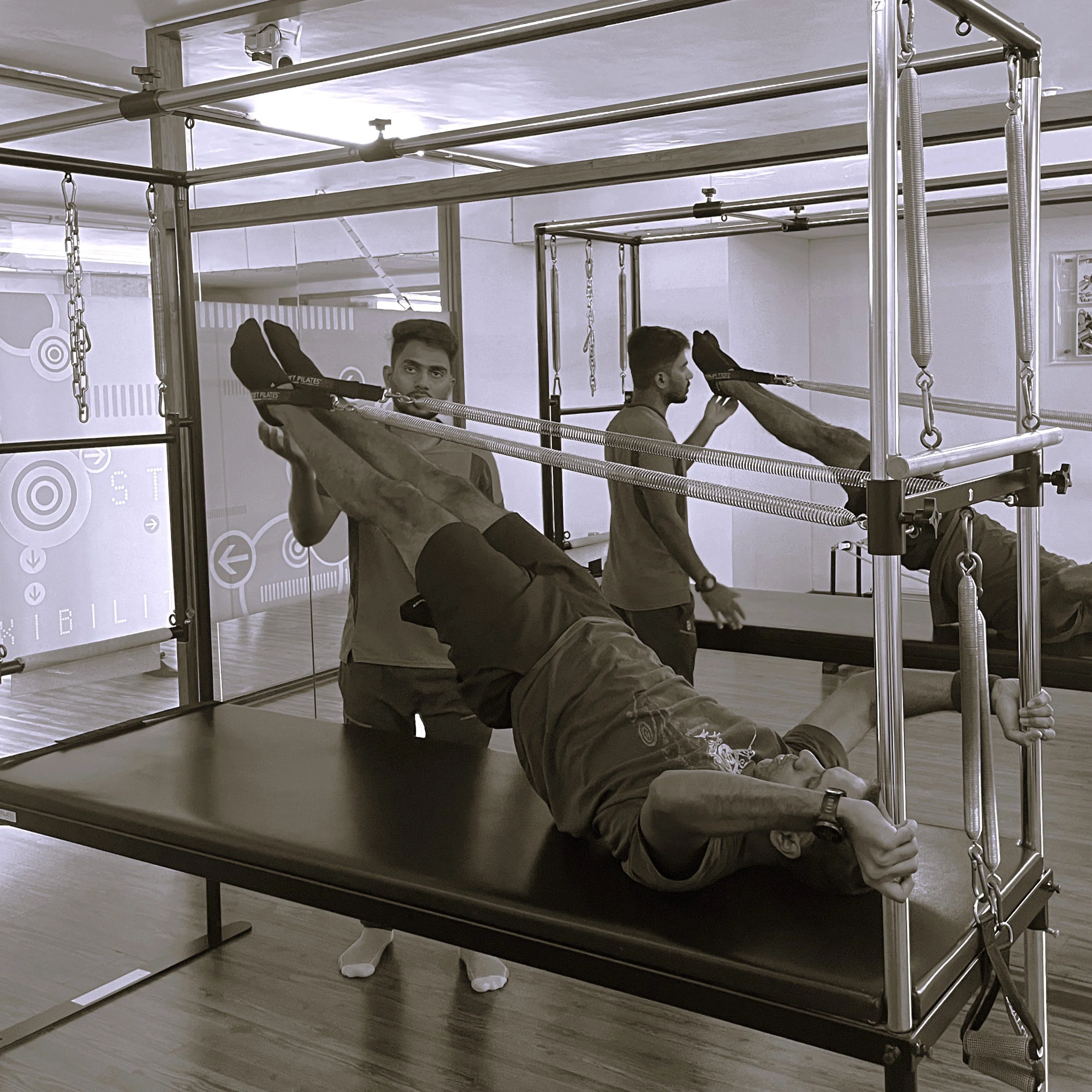
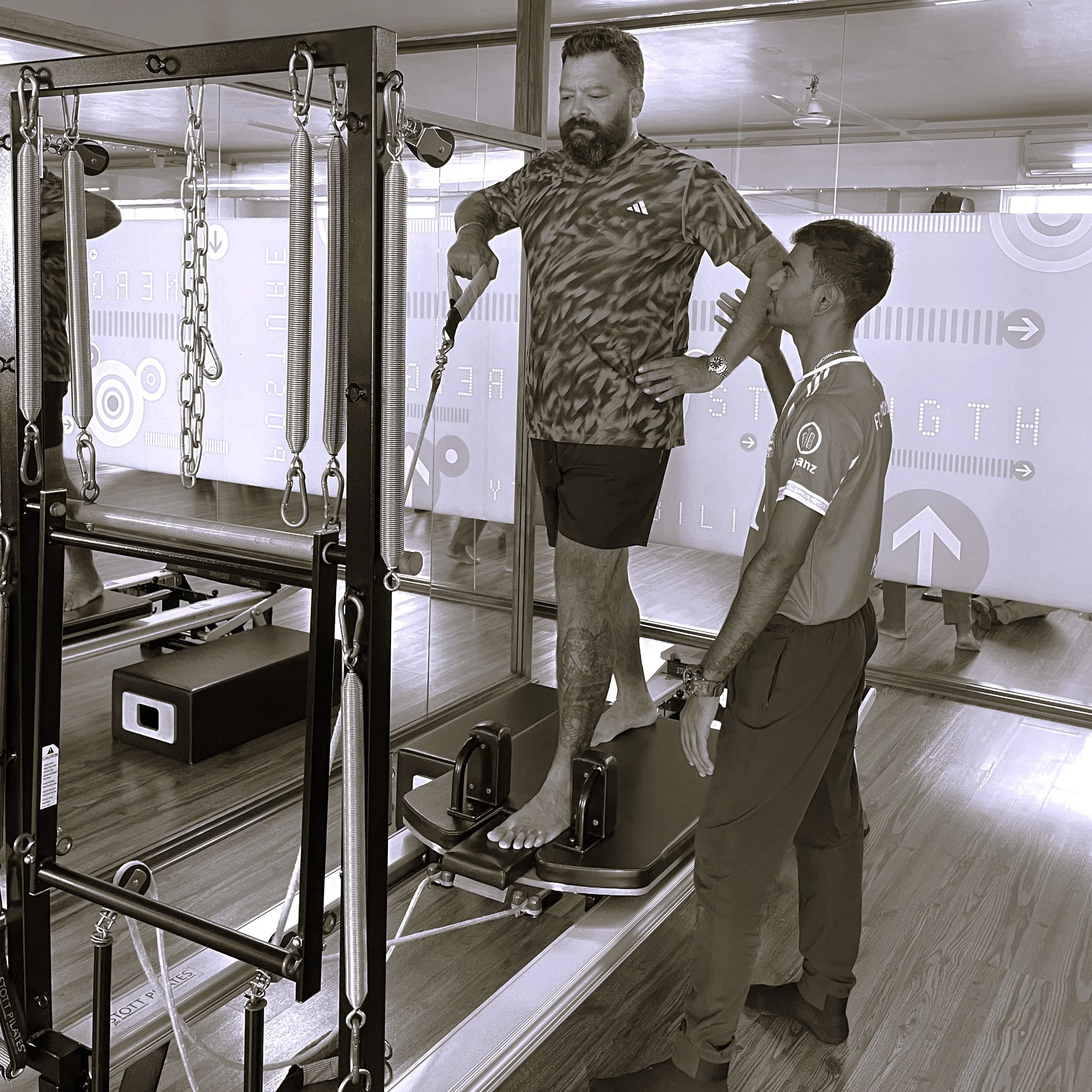
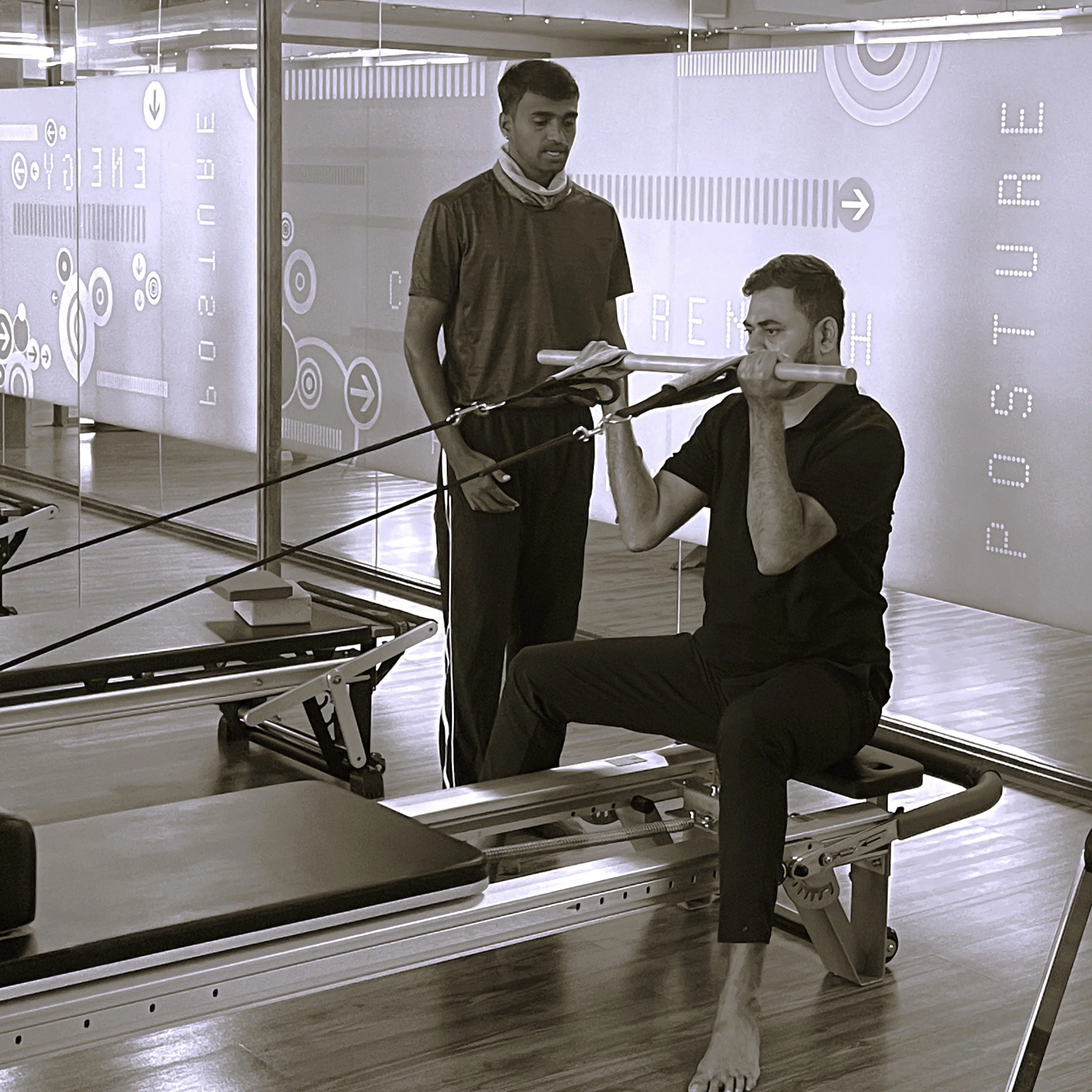
Across decades of teaching men, here is what I have seen Pilates deliver.
Improve mobility. Most men carry their tightness in the same places: hips, upper back and shoulders. Years of lifting, running, cycling and sitting build strength in a narrow range, and the desk makes it worse: forward head, rounded shoulders and stiff hips are predictable patterns, and they are correctable. Pilates restores the range and teaches your strength to work through it. (More on this in Mobility vs. Flexibility and From Desk Slouch to Pilates Strength.)
Build functional strength. Functional strength is not built through crunches. It comes from deep stabilisers coordinating with the hips and shoulders, so force moves cleanly through the body, whether that is picking up your child, carrying luggage through an airport, or keeping up on an active holiday. The same coordination is also what improves a deadlift, a golf swing or a running stride.
Reduce injury risk. Pilates finds imbalances before they become injuries: one side doing more of the work than the other, or a stiff upper back leaving the lower back to compensate.
Left uncorrected, these are the patterns that catch up with you: aching knees on the stairs, a strained back from lifting something awkwardly, your shoulders on a long flight.
The same holds in the gym and on the field, a tight hip that turns into a strained hamstring on a run, a weak stabiliser that becomes a shoulder injury under a heavy lift. Catching these early, before they turn into a repetitive injury, keeps your training consistent.
Enhance athletic performance. For anyone who lifts, runs or plays a sport, better coordination and body control show up directly in performance. Movement becomes more efficient under load and at speed, translating into more power with less wasted effort.
Support longevity. The goal is not simply a longer life but a more capable one: getting up off the floor without thinking about it, travelling without your back complaining, still moving well and staying active for years to come. Pilates builds that kind of durability by training control alongside strength, so your body keeps meeting the demands you place on it, year after year, whatever stage of life you train through.
(More on this in Why Pilates Is the Original Longevity Workout.)
Achieving this combination of mobility, strength and control is harder than Pilates makes it look. That's why it's so often underestimated.
Isn’t Pilates too easy?
No. Pilates is slow, controlled, spring-loaded work, and there is nowhere to hide behind momentum. Strong men are often surprised to find the smallest movements the hardest, because the effort comes from control, not load.
If you can move serious weight but cannot hold a slow single-leg movement with your pelvis perfectly still, that is useful information. It is also the gap Pilates closes. (Beyond the Rep Count covers why precision beats volume.)
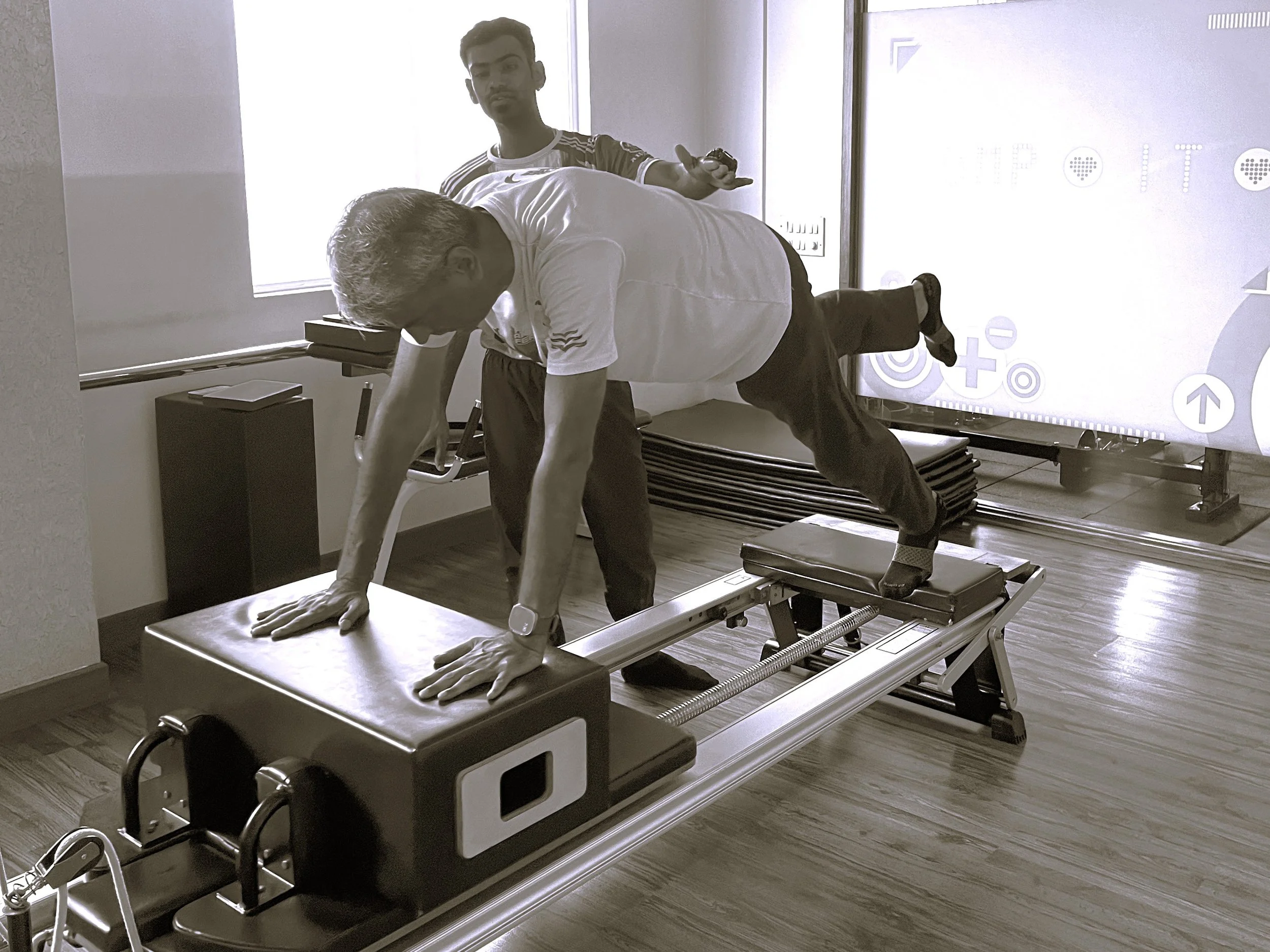
Pilates fits every kind of movement
Whatever the physical demands of your week - from parenting to travel and work, to your training and sports schedule - Pilates improves how your body handles it. Two sessions a week alongside your existing routine is enough to feel the difference.
The same principle holds at the highest level. Footballers such as Cristiano Ronaldo, tennis players such as Roger Federer, Andy Murray and Serena Williams, golfers such as Tiger Woods, and basketball players such as LeBron James have all built Pilates into their training.
What works for an athlete preparing for competition is the same control and stability that helps anyone move better through an ordinary week.
For sport-specific work, see Sports Performance.
Why do the equipment and the instructor matter?
Equipment and instruction are what turn these benefits into results.
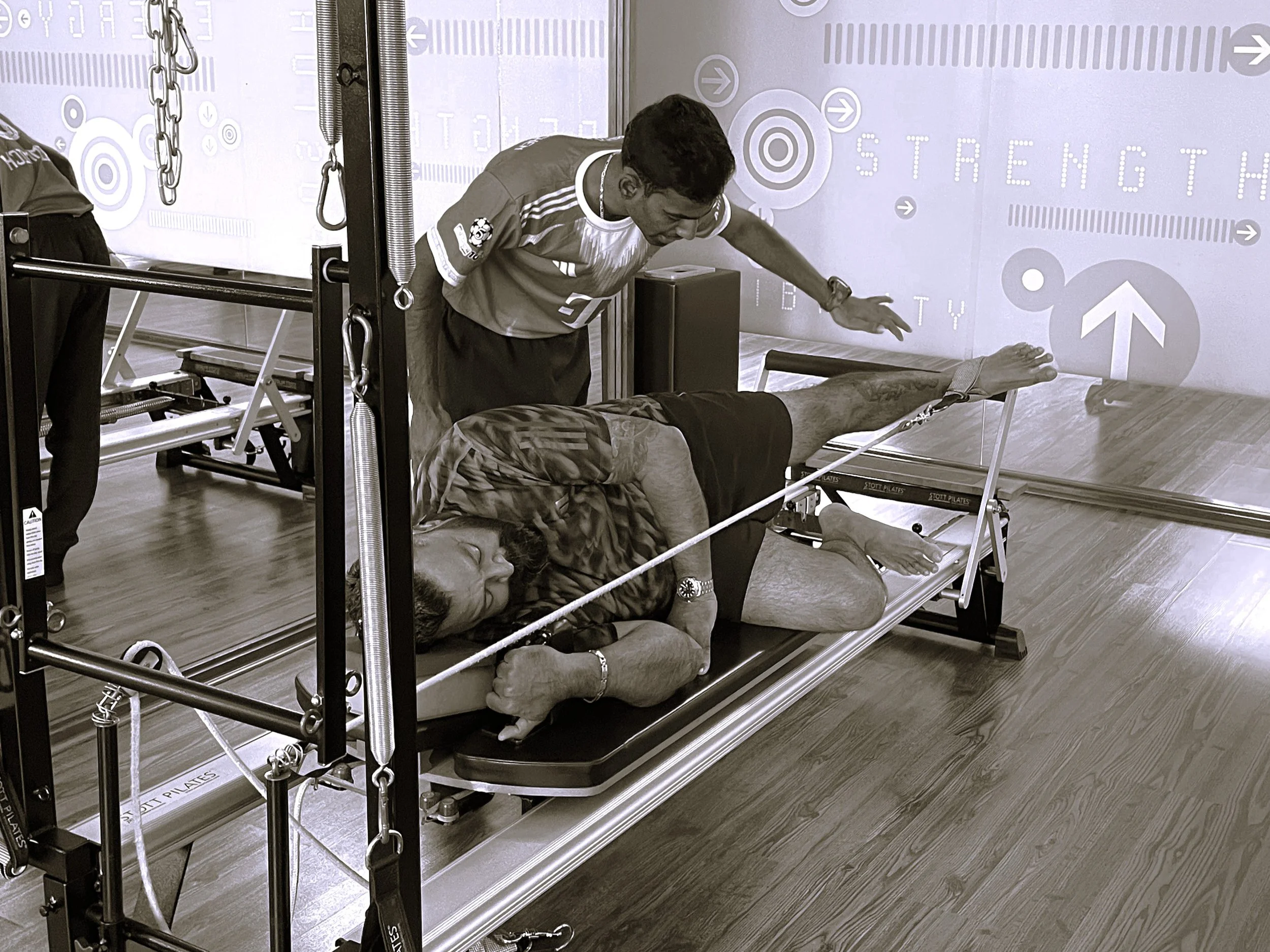
The right equipment provides resistance and support as you move, while an instructor sees what you cannot feel: the shoulder that hikes, the pelvis that tips, the hip that quietly takes over.
Men tend to compensate for a weaker muscle by letting a stronger one take over, and a good instructor spots this and redirects the effort back to the muscles that should be doing the work.
Frequently asked questions
Is Pilates good for men? Pilates builds strength, mobility and control. It supports everything your body needs to do, from lifting weights to keeping up with daily life.
Do professional athletes really use Pilates? It is used across football, tennis, golf, basketball and other sports, as part of strength, conditioning and injury prevention work.
Can Pilates build muscle? Pilates builds lean muscle and strength, particularly through the trunk, hips and shoulders. It also increases joint range and control, which makes strength training for size more effective and reduces the risk of injury while you build it.
How often should men do Pilates? Two sessions a week is a strong starting point. It is enough to build the movement patterns and see real change, while leaving room to recover and keep up your other training.
Is Pilates good for lower back pain? Pilates is widely used in rehabilitation, building the stability and control that protect the lower back over time. See Rehabilitation for more on how this works.
Should men start with mat or Reformer? Start on the equipment. The Reformer challenges or supports as needed, giving feedback that mat work alone cannot provide.
Whatever question brought you here, there's a simple way to find the answer: start.
Men often notice the difference within a few sessions: less tightness, more control, a body that keeps up with what they ask of it.
I pioneered Pilates in India in 2005. Two decades on, this shift, from tightness and compensation to real, lasting control, is still one of the most rewarding things I get to see in my studio.
If you would like to feel it for yourself, book a session at The Zone.