Beyond Spot Reduction: The Real Way to Reshape Your Body
In this post:
Why targeting your “problem area" with exercise won't reduce the fat there — and what's actually happening when you train
How fat loss works in the body — and why the muscle you're training has nothing to do with it
Why your “stubborn" areas aren't a training failure — they're biology
The two things that actually reshape the body — and why neither works without the other
How we approach this at The Zone — and why Pilates and H.I.C.C. address both sides of the equation
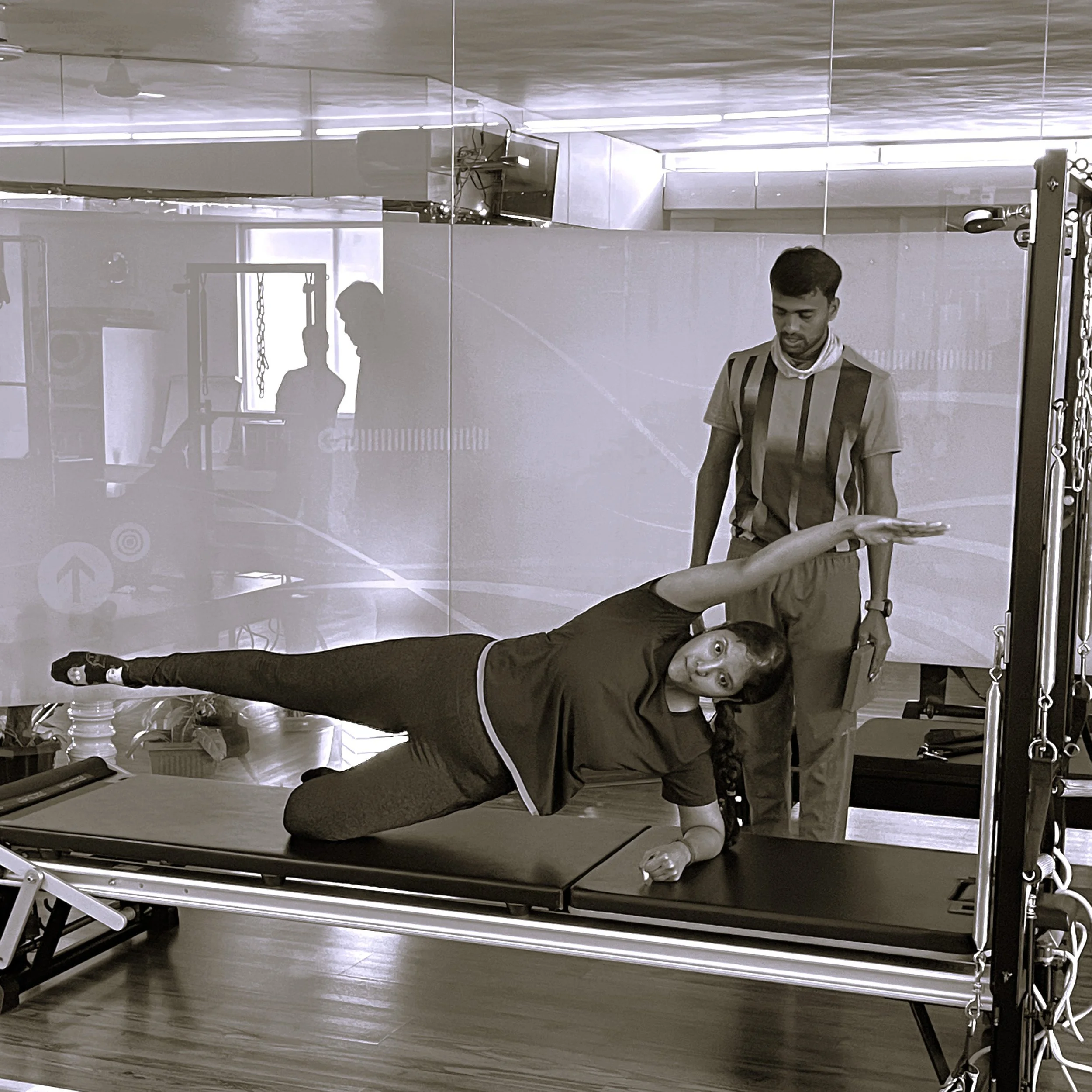
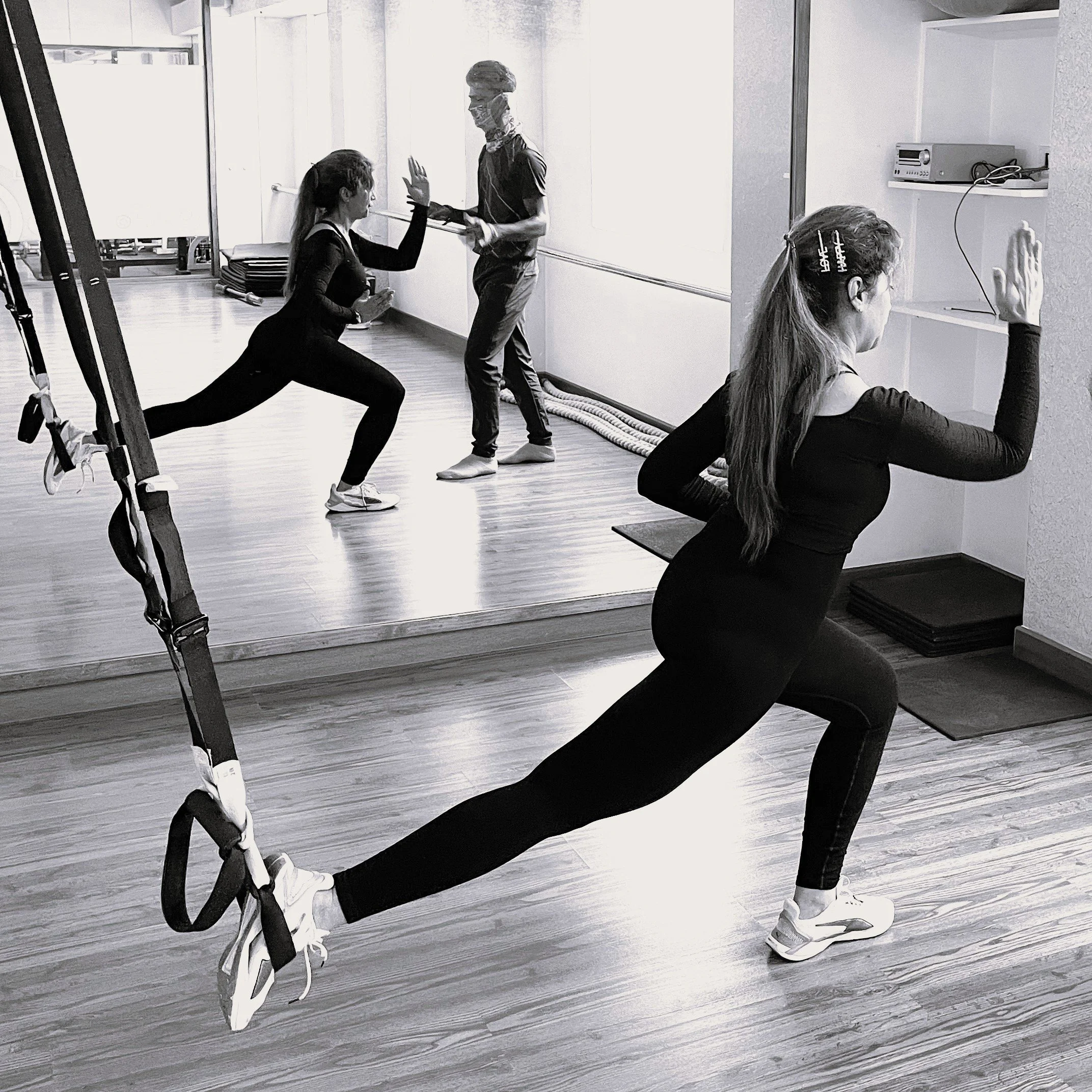
I hear versions of this all the time. "I need to lose my belly - what core exercises should I do?" Or "My thighs are the problem area, so I've started doing squats and lunges every day." I understand the logic. It makes intuitive sense that if you work a specific body part, the fat there will go. But that's not how the body works.
Spot reduction is a myth. You cannot choose which part of your body loses fat by training the muscles in that area. Not with crunches, not with lunges, not with any exercise.
Why Fat Loss Doesn't Work That Way
When your body needs energy - during exercise or at any other time - it doesn't draw from the fat stores closest to the muscles you're using. The process is systemic.
Hormones signal fat cells across the entire body, stored fat is released into the bloodstream, and the body converts it into usable energy wherever it's needed. The muscle you're training does not determine where that fat comes from.
This means that doing a hundred crunches a day will strengthen your abdominal muscles. But it will not reduce the fat sitting above them. The fat and the muscle are separate systems. Exercise acts on the muscle. It does not directly act on the fat cell sitting above it.
Fat and Muscle Are Distinct from One Another
Fat and muscle are two completely different types of tissue - one cannot turn into the other. Though a pound of fat and a pound of muscle weigh the same, muscle is far denser and takes up considerably less space. This explains why you can lose inches but still weigh the same on the scale.
More importantly, muscle and fat function differently. Muscle is metabolically active – it burns calories even at rest. Fat tissue stores energy and in comparison, burns fewer calories.
This distinction matters when we talk about body composition, because losing fat while building muscle produces a very different result than simply losing weight – adding lean muscle mass not only builds strength but brings definition and shape. Focusing only on fat loss — through extreme dieting or cardio alone — produces weight loss without the strength, shape, or definition that lean muscle provides.
Lean muscle burns more calories at rest than fat tissue, which is why building it supports long-term results, increases endurance, and improves overall energy levels.
What Genetics Has to Do With It
Where you lose fat - and in what order - is largely determined by genetics. The areas people describe as “stubborn" are usually the last places the body releases fat from.
This isn't due to incorrect training or a lack of effort. It's biology. Your body has a predetermined sequence for how it sheds fat, and no amount of targeted exercise will override that sequence.
This is why two people can follow identical training programmes and see fat come off in entirely different places. Same work, different results - not because one person is doing something wrong, but because their bodies are following their own genetic blueprint.
What Actually Produces Results
If spot reduction doesn’t work, what does? The answer has two parts — and both matter equally.
The first is overall fat loss
Fat reduces across the body as a whole, not from any one area in isolation. Creating the conditions for overall fat loss requires cardio training combined with diet and nutrition working together. Neither alone is enough.
On the cardio side
The approach matters as much as the effort. Aggressive, high-intensity cardio — the kind that pushes the body to its limits every session — is difficult to sustain and significantly increases the risk of injury. An injured body cannot train consistently, and consistency is what drives fat loss over time. The goal is cardio that challenges the body, elevates heart rate, builds endurance, and can be maintained week after week, month after month, without breaking the body down in the process.
On the nutrition side
What you eat directly determines whether your body has the conditions to lose fat or not. Food choices, meal timing, and overall energy all play a significant role — and no amount of training will fully compensate for nutrition that works against your goals. This doesn’t mean extreme restriction or short-term dieting. In fact, chronically under-fuelling the body slows metabolism, compromises recovery, and makes consistent training harder. The aim is balanced nutrition that supports energy, fuels performance, and creates the right conditions for fat loss over time.
The second part is strength training
Strength training builds muscle in the specific areas you want to reshape. That muscle is always being developed through training - but the definition and shape it creates only becomes visible as the fat above reduces. This is why two people at the same body weight can look completely different — one with little muscle development beneath their fat, and one with a strong muscular foundation that becomes increasingly defined as fat reduces.
These two parts work together.
Muscle gives the body its shape. Fat loss reveals the muscle. You need both.
This Is Where Pilates and H.I.C.C. Come In
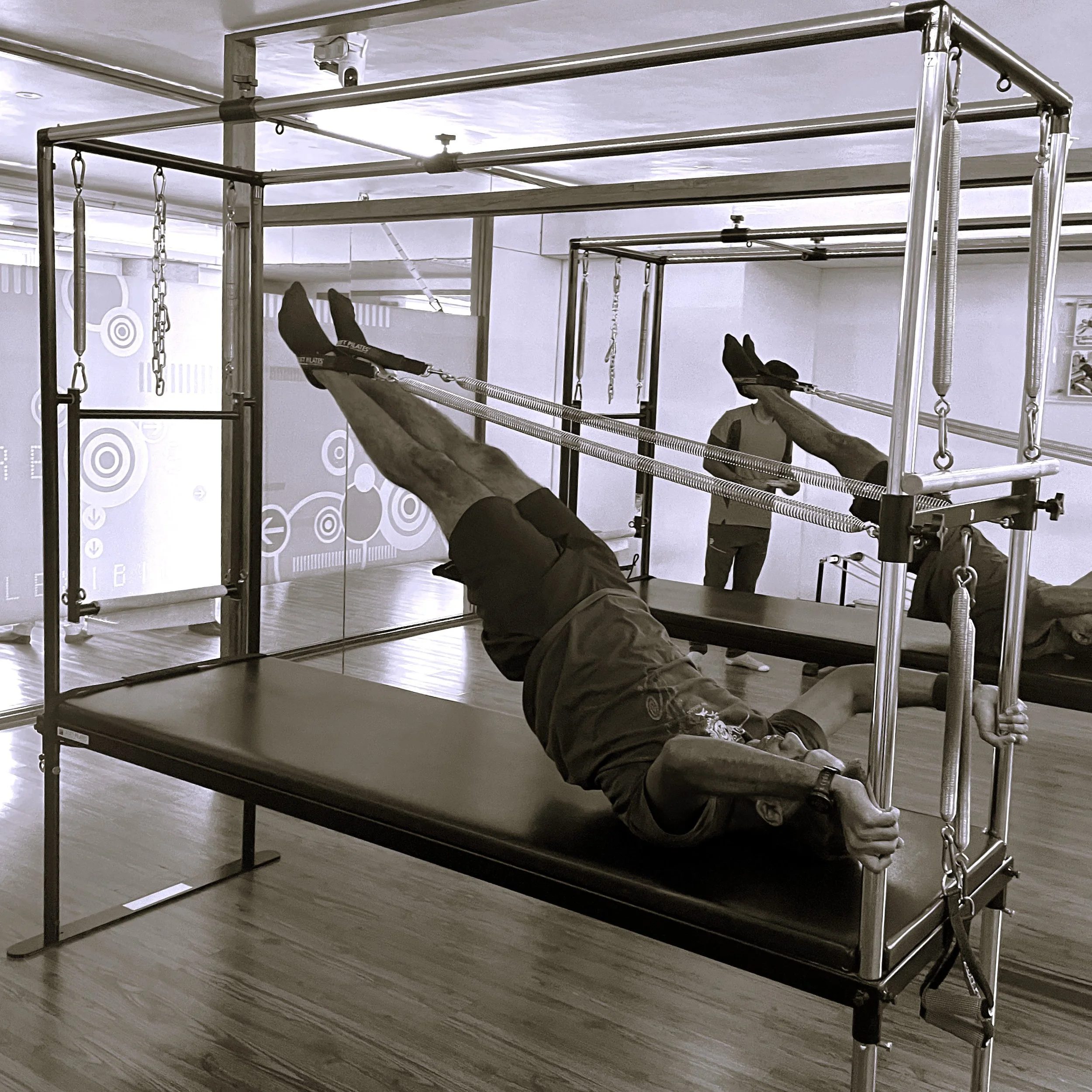
At The Zone, we offer two programmes that address both sides of this equation — and they work exceptionally well together.
Pilates
Pilatesbuilds deep, functional muscle strength. The kind that creates genuine structural change — not surface-level tone. There is a shift in how the body moves — efficiently and effectively — and that carries over into every other form of training, whether cardio or strength work. Precision training builds the muscle beneath the fat that becomes visible as body fat reduces. In thirty-five years of working with clients, that’s what I see consistently — the definition is always being developed beneath the surface. Fat loss simply reveals it.
Pilates keeps the body moving well. Injury, stiffness, and compensatory patterns are among the biggest disruptors of consistent training. When your body is well-conditioned and structurally sound, you can train consistently — and consistency is what produces fat loss over time. There’s no substitute for it.
H.I.C.C.
H.I.C.C. — High Intensity and Core Challenge — is a programme we designed specifically to address the cardio and conditioning side. It combines strength and conditioning, Pilates resistance training, core work, and interval training into a single, integrated workout. The intensity is real, but the approach is intelligent — low impact, injury-aware, and built for sustainability. It is not about pushing the body to exhaustion in the short term. It is about building a body that gets stronger, leaner, and fitter over time, through training it can actually sustain.
Together, Pilates and HICC address what actually produces results: building muscle, supporting fat loss, keeping the body consistent, and doing all of it in a way that doesn’t break you down in the process.
The Honest Answer
You cannot choose where fat comes off first. But you can choose a training approach that builds the muscle, supports fat loss through sustainable cardio, and keeps the body consistent enough for fat loss to happen across the whole body over time.
That's what we work towards at The Zone. Not chasing a specific body part. Building a body that functions well overall - and letting the results follow from that.
If you'd like to understand what a training approach like this looks like for you, we'd be glad to hear from you.
Contact The Zone
Further reading:
Built to Move. Train to Last. — Pilates for Runners, Cyclists and Trekkers