Instagram Pilates vs. The Real Thing
In this post:
Instagram Pilates is a look - actual Pilates is a method. This piece breaks down what separates the two, why your choice should be based on your body — not on trends or follower count, and what to actually look for in a trainer or programme.
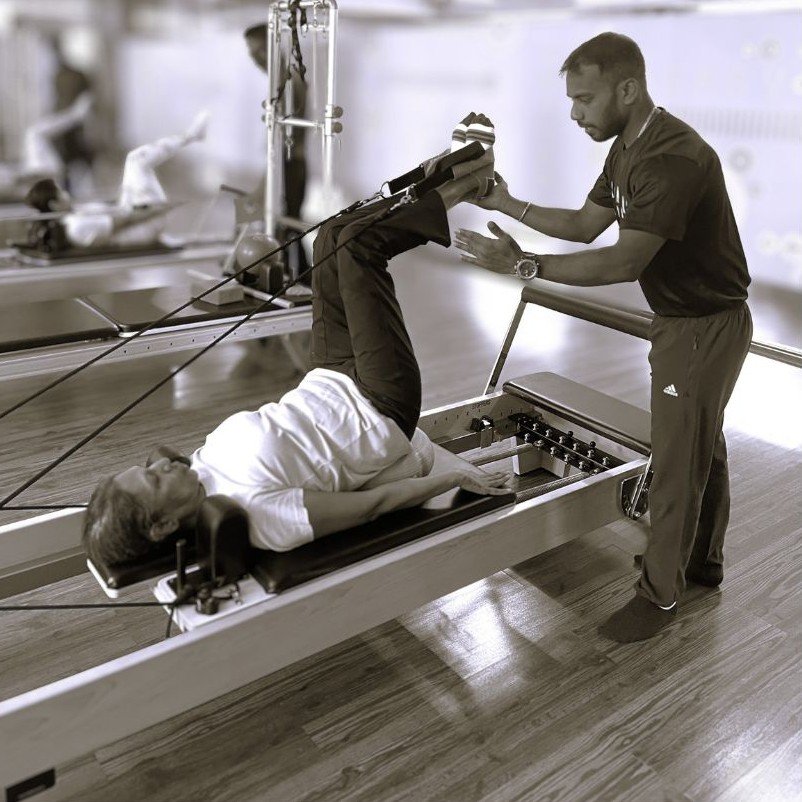
Instagram Pilates: beautiful aesthetics, calm zen interiors, a graceful figure on the Reformer, Cadillac, or Chair. The photos and videos all focus on how Pilates looks — not on what Pilates does, or actually feels like, when it's working.
The current popularity of Pilates has genuinely been fuelled by its Instagram presence - and more people curious about the method is a good thing. But there's a widening gap between the version of Pilates that photographs well and the version that actually changes how a body works, and it's important to call it out clearly.
Two Versions of the Method
The Instagram version of Pilates is a look and a mood — control, flow, a certain kind of calm intensity. The actual practice is a method of retraining movement: recruiting the right muscles in the right sequence, correcting imbalances that have built up over years, teaching a body to stabilise before it mobilises. One is content. The other is corrective, functional work to build strength — that happens to look elegant when it's done well. The elegance is a byproduct, not the point.
This distinction matters because it affects how people choose. When “looking like you're doing Pilates” becomes the reference point, people start choosing their studio and trainer the way they'd choose anything else on their feed — based on what's visually appealing or currently popular, rather than on what your body actually needs. This shows up most clearly when the choice is made second-hand — following an influencer's trainer, or a studio, simply because someone with a following chose it first.
A trending reel or a Follower Count tells you a studio has a good content team — a different skill from understanding anatomy, injury patterns, or how to build a programme around your specific history.
Those are separate skill sets, and one doesn't guarantee the other.
An Increasingly Common Trend
Social media is where people discover almost everything now, fitness included, and there's nothing wrong with that. There's a real difference, though, between discovering a studio exists through Instagram, and choosing that studio because of its Instagram presence. The first is just how information travels today. The second hands over a decision that should be based on your body and your goals — to an entirely unrelated metric: popularity.
There's a cost to this beyond the initial choice, too. Fitness decided by what's trending keeps people restless by design — every new viral workout demands trying it, every new celebrity endorsement demands switching again.
Over three decades in this field, I've watched trends come and go. None of them led to lasting change in anyone's body.
Real progress — functional strength, rehabilitation, postural correction, genuine core strength — comes from sustained, consistent work with someone who understands your body specifically, and who progresses your programme accordingly. It’s the kind of work that rarely trends – but brings sustainable change.
Group Classes Built for Energy, Not for You
A related version of this same problem shows up in the currently popular group class formats — classes built around high energy, upbeat music, and a group of people moving through an identical sequence together. They're easy to promote, they photograph and film well, and for some people they double as a social occasion as much as a workout.
But energy cannot replace programming — a class built for a group isn't built for any one person in it.
It cannot account for the person managing a disc issue, the person rebuilding core function after childbirth, or the shoulder that's never been properly rehabilitated. When a generic, high-energy class becomes someone's primary approach to movement — chosen because it looks appealing on a feed rather than because it suits their body — the imbalances and compensations that actual Pilates is meant to correct often go unnoticed, or worse - keep getting reinforced.
The Fundamental Truth Influencer Culture Skips Past
At the heart of all of this sits the most basic principle in this field, and the one most consistently ignored: what works for one person will not necessarily work for you.
Your spine is not your friend's spine. Your recovering shoulder is not the shoulder of the person in the video. Someone else's flexibility, their history of injury or surgery or pregnancy, their years of accumulated movement patterns — none of it transfers to you.
A programme that got a public figure “great results” was built around their body, their limitations, their lifestyle, and often, their access to daily one-on-one supervision that never makes it into the clip.
Fitness that actually works is built specific to the person doing it. It starts with understanding what your body needs and can safely do — not with replicating what looked impressive on someone else's feed.
What I'd Ask You to Consider Instead
Before choosing a studio or a trainer, look past the feed entirely. Ask about certifications. Ask how long they've been teaching and their experience. Ask about the depth of their teaching — is it generic, one-size-fits-all group work, or is there real experience in rehabilitation, sport-specific conditioning, prenatal and postpartum training, whatever is actually relevant to you. This is what leads to results — the kind of detail a trending profile won't show you.
Your fitness cannot be crowdsourced. When you choose based on someone else's choice rather than your own evaluation of credentials and experience, you're not making a fitness decision — you're making a social one. What works is what's built for you: programmed, layered, and progressed through actual expertise and experience. Everything else is just content.
At The Zone, our one-on-one sessions are built around this principle specifically. Every session, your instructor is watching how you move — the compensations, the restrictions, the imbalances that show up that day or that have been building for years — and that's what our programming responds to, session over session.
It's specific to you.
Making a Mindful Choice
Pilates content is enjoyable and has made the method more visible and more popular — both of these are genuinely good things. What matters is being mindful about the difference between the two versions. The version worth your time and your body's investment isn't the one that trends. It's the one built by someone equipped to understand your body — its history, its goals, its lifestyle — and to train it accordingly.
If you're ready to train based on what your body actually needs — not what's trending — find out how a Pilates Personal Training Program at The Zone, Bangalore can work for you.